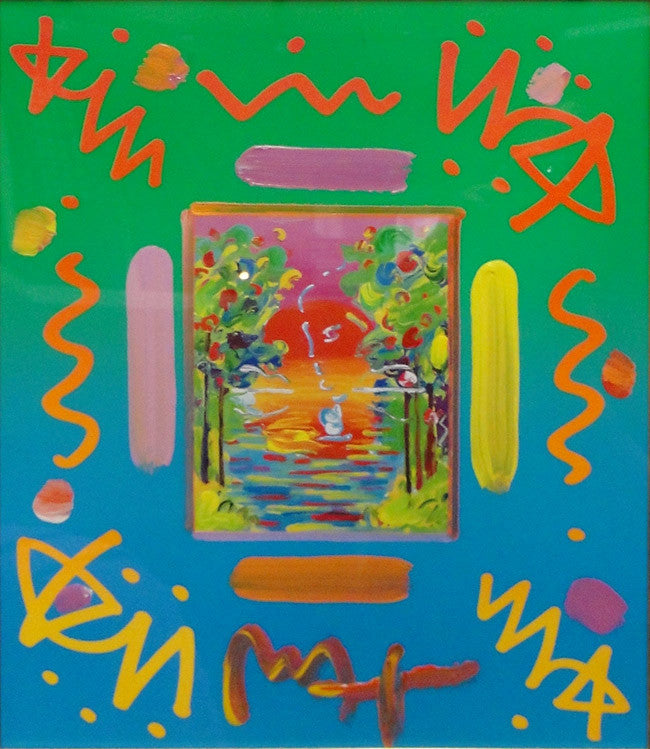


A life shaped by movement
Peter Max was born into a Jewish family in Berlin in 1937. His parents fled Nazi persecution with him the following year, settling in Shanghai. His childhood unfolded across very different places: China, Israel and, briefly, Paris, before the family reached New York in 1953. That journey placed European art, Asian visual traditions and American popular culture within the experience of one young artist.
In Paris, his mother arranged drawing classes at the Louvre. In New York, he studied with Frank Reilly at the Art Students League and later attended the School of Visual Arts. Realist training preceded the floating figures and heightened color for which he became known. His later freedom with an image grew from a grounding in drawing and composition.
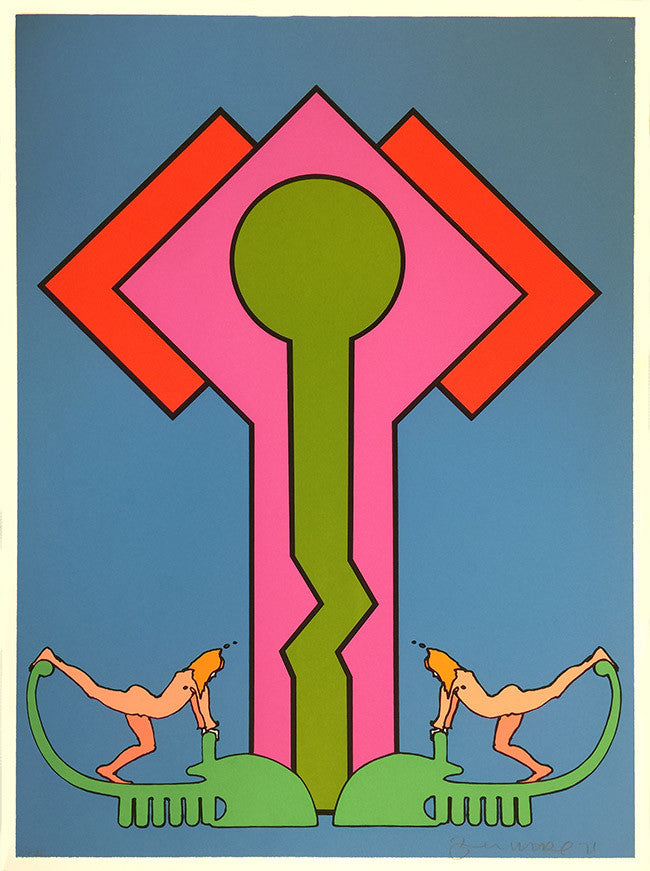
He opened a Manhattan design studio with Tom Daly in 1962. Book covers and record sleeves offered an immediate audience and a practical discipline: a picture had to capture attention. This commercial beginning became a lasting part of his artistic identity.
The Cosmic era: an image could travel
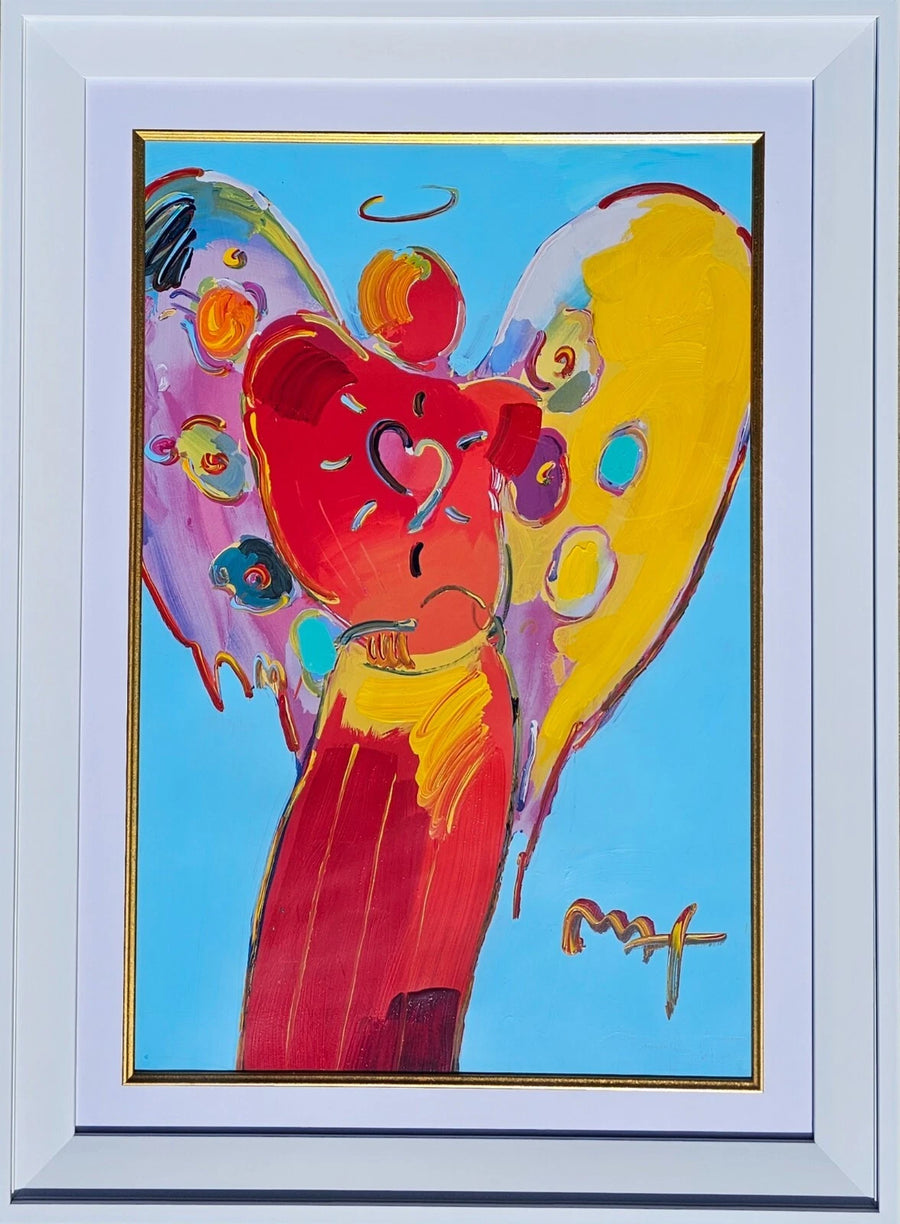
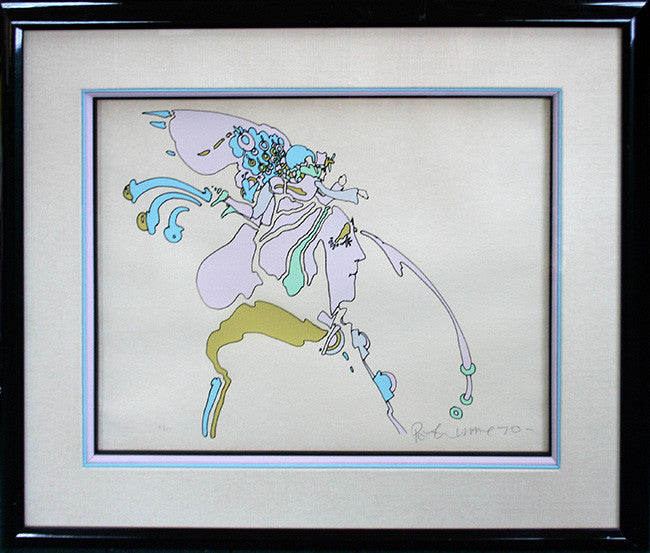
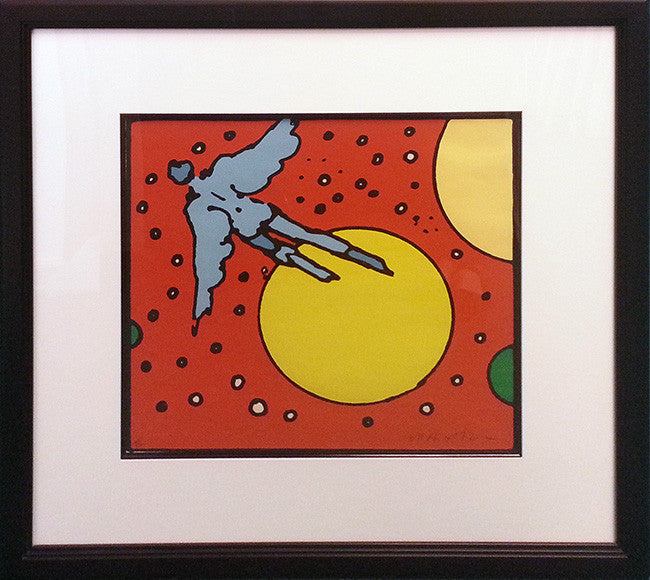
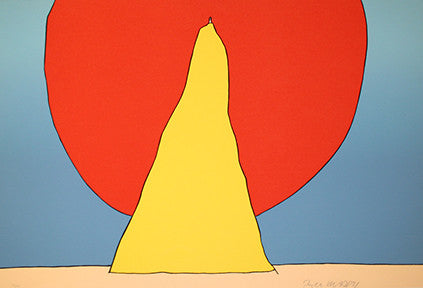
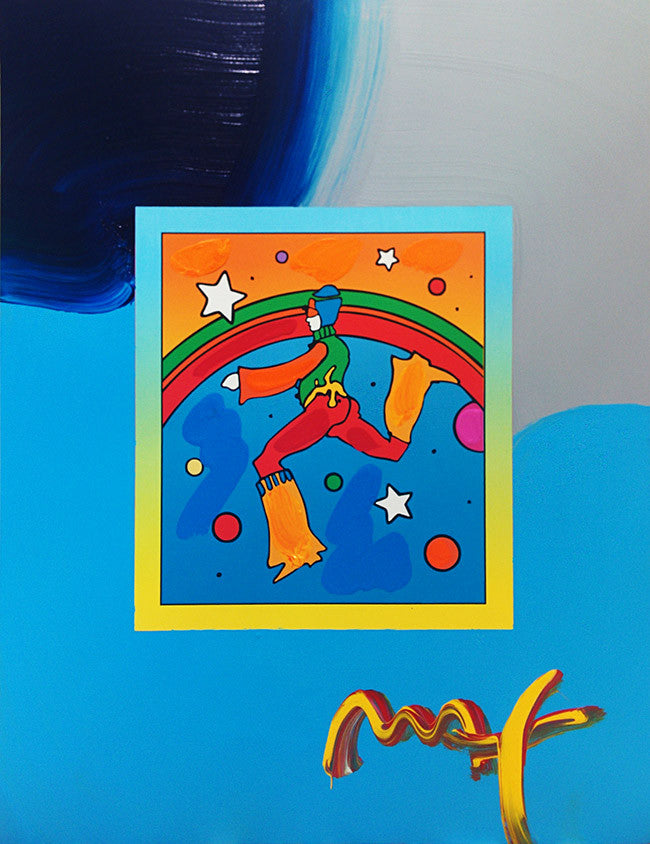
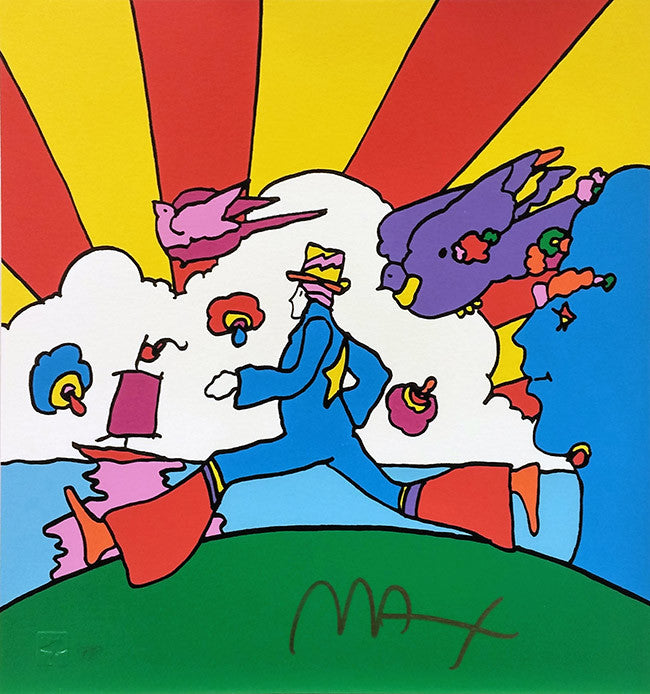
Astronomy gave Max a subject that could accommodate almost anything. His studio biography traces his interest in the cosmos to his youth. In the work that became associated with the Cosmic era, stars, planets and floating figures made earthly space feel expansive and unstable. A human profile might belong to a landscape; a body could appear released from gravity. The universe became a setting for imagination rather than a scene to be described scientifically.
Eastern spirituality also mattered. Max met the yoga teacher Swami Satchidananda in Paris in 1966, invited him to New York and helped establish the Integral Yoga Institute. That relationship connects the work to a wider countercultural search for different ways of living and perceiving.
Poster House’s study of his early graphics identifies nature, collage, astronomy and Eastern philosophy as recurring themes. Its account emphasizes his optimism. The fluorescent dreamscape could be strange without becoming threatening. That combination helped make the pictures welcoming to an audience exploring new music, new communities and new visual experiences.

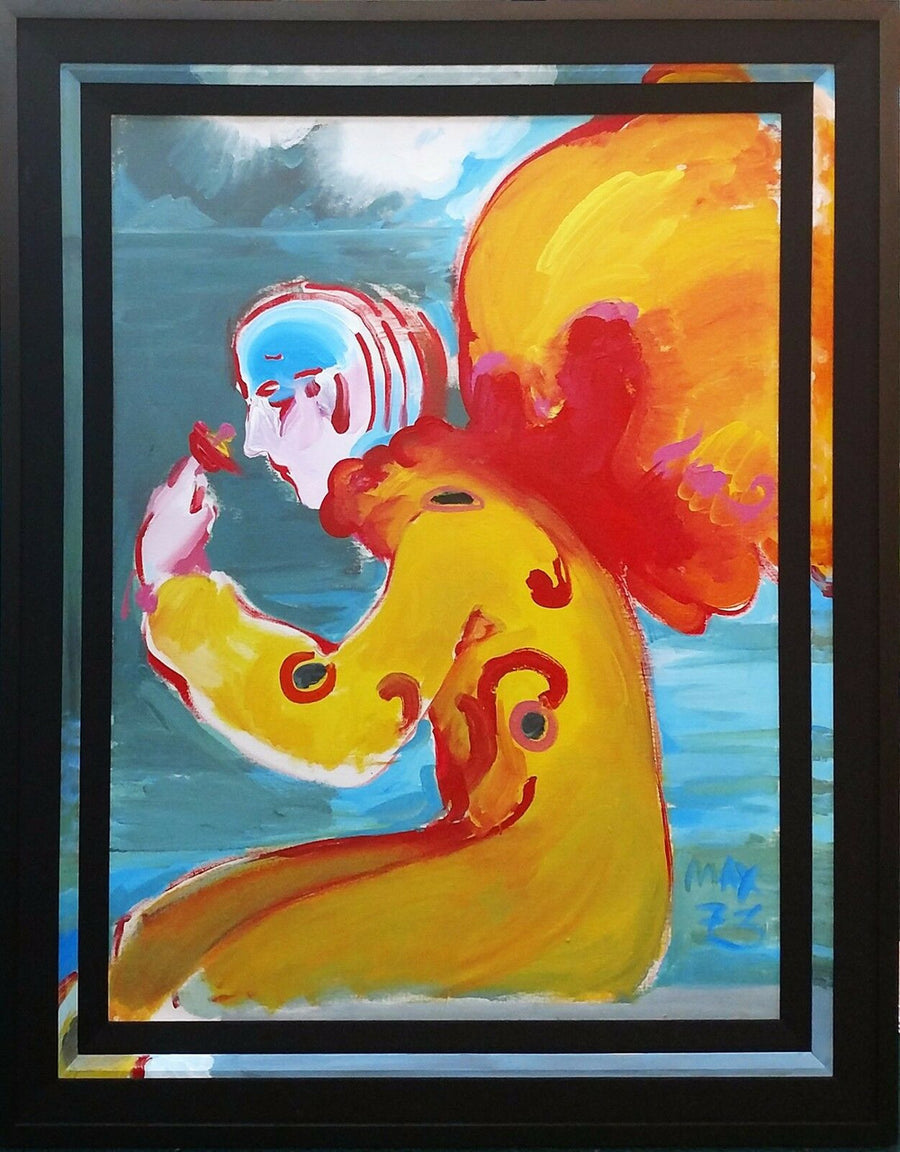
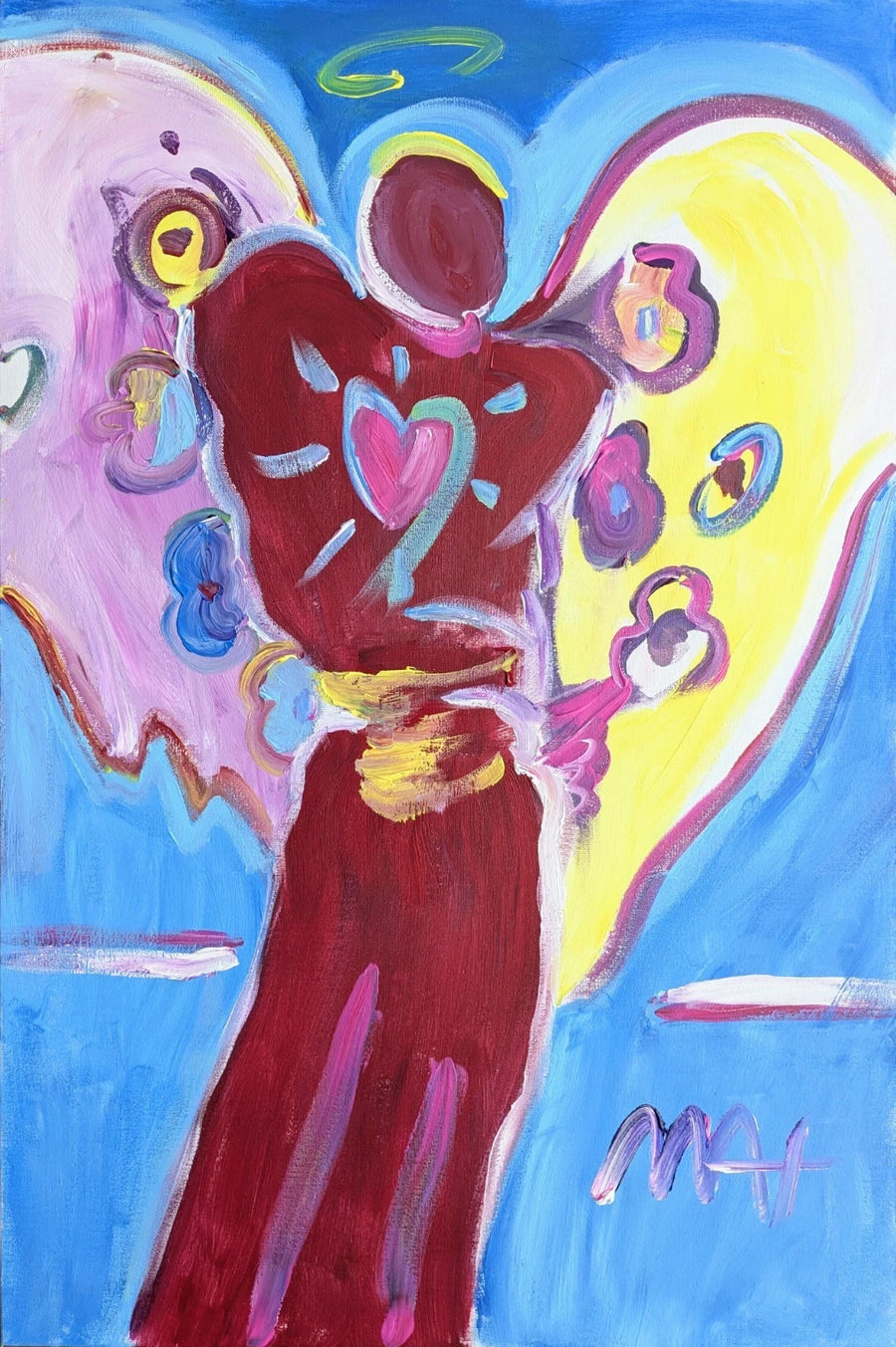
Angel (Original)
$45,000 · By inquiry
Inquire about this workAngel, 1978. Acrylic on canvas.
Success beyond the gallery
The late 1960s brought extraordinary visibility. Max appeared on the cover of Life in 1969, becoming a recognizable public figure as well as a designer. His work was reproduced on consumer goods and used in commercial campaigns. General Electric commissioned art clocks; posters and household objects carried his imagery far beyond specialist art audiences.
His success was inseparable from the ease with which the work moved between formats. Flowing outlines and strong color could hold their identity on a wall, a printed page or a manufactured object. Countercultural imagery was becoming part of the commercial mainstream, and Max stood close to that intersection.
Artnet describes a career that alternated intense exposure with withdrawal and renewed invention. The scale of the business did not erase the artist’s interest in painting, but it shaped how the public encountered him. Many people knew the images before they knew his name. Others recognized the name from television, magazines or products before seeing an original work.

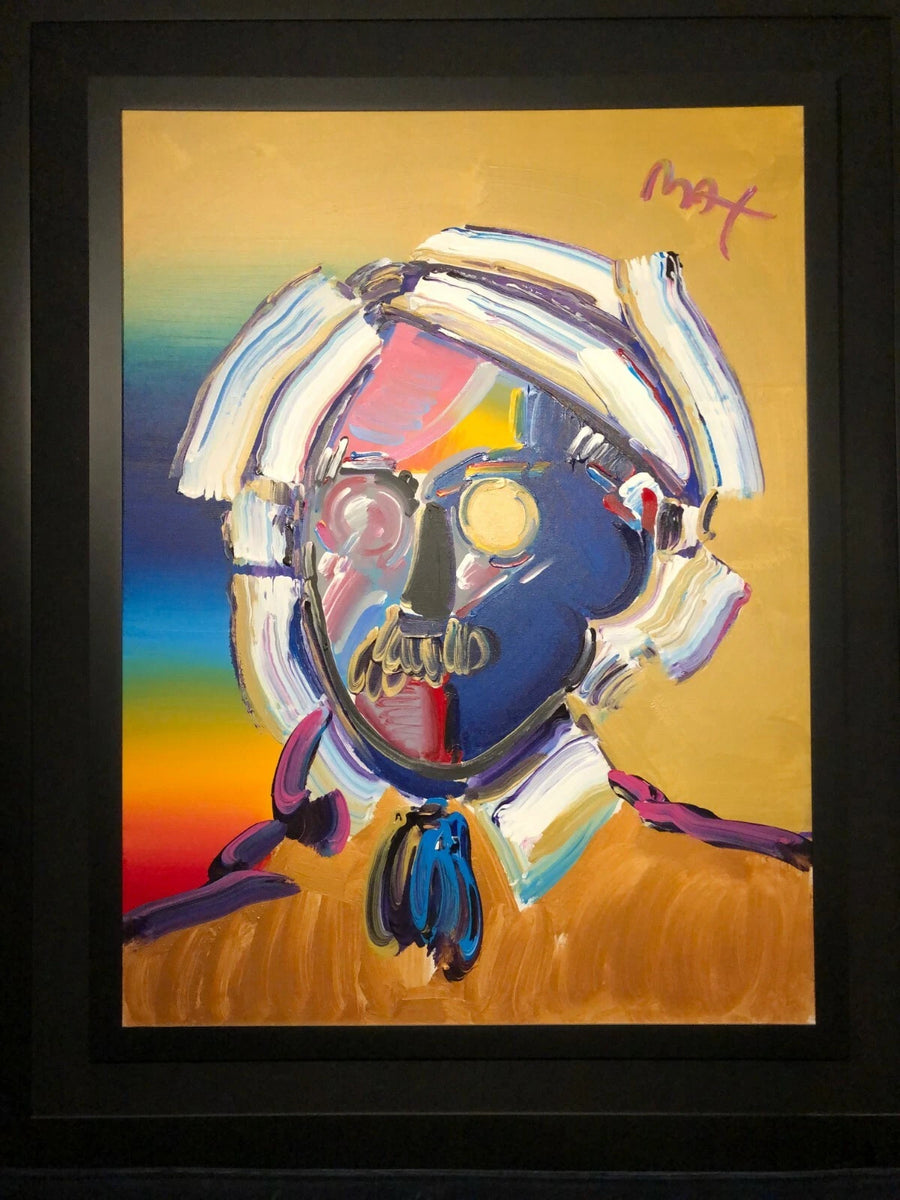
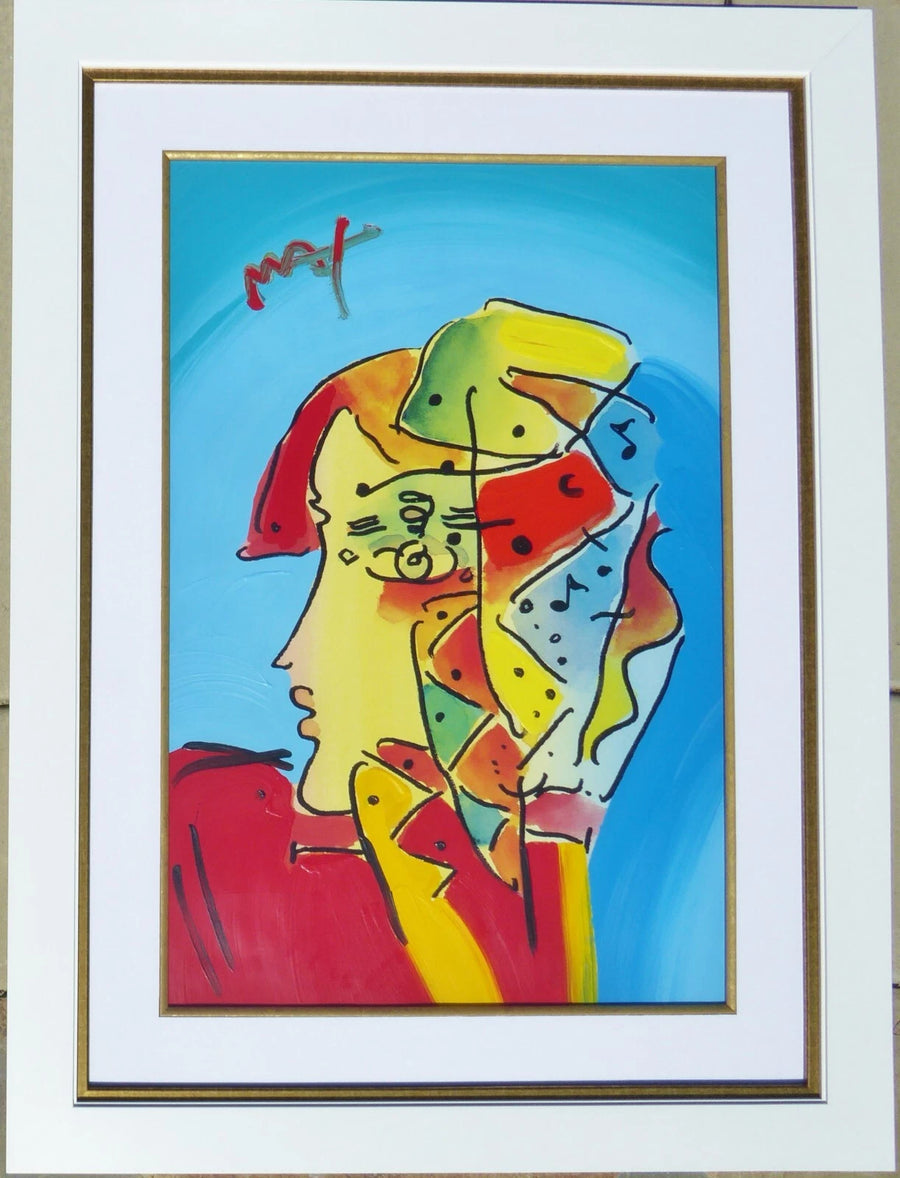
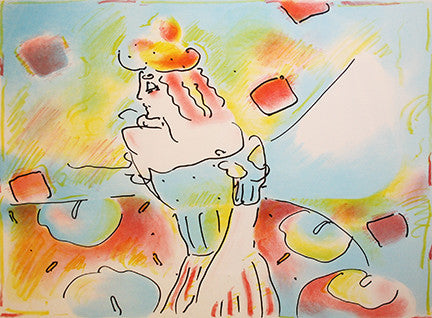
Andy With Mustache
$99,000 · By inquiry
Inquire about this workAndy With Mustache, 2002. Acrylic on canvas.
From flowing line to expressive paint
During the 1970s, Max turned toward a broader, more physical painting style. The finely bounded shapes of the posters gave way to freer brushwork. The Art Newspaper describes a period of retreat in which he developed paintings he called neo-expressionist. The Department of State likewise distinguishes his acrylic work and spontaneous, large-brush gestures from the graphics that first made him famous.
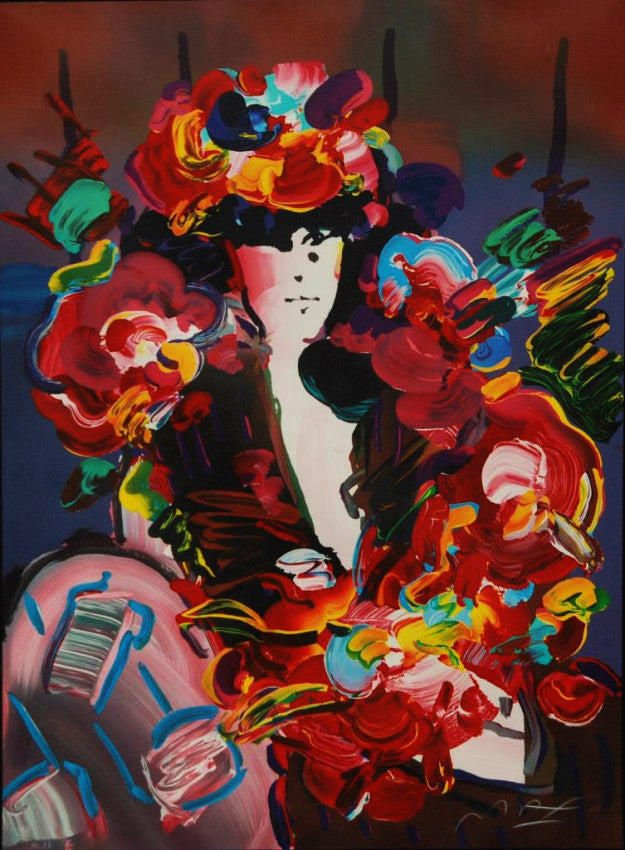
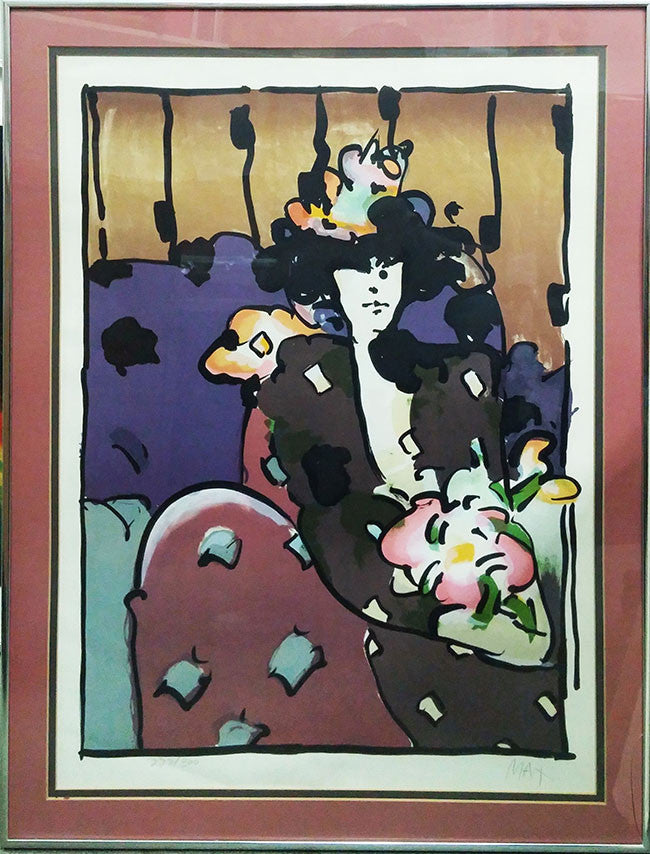
That change did not require abandoning recognizable subjects. Flowers, faces and figures could remain legible while color and paint handling became more assertive. The image could carry both the familiarity of a motif and the movement of the hand that made it.
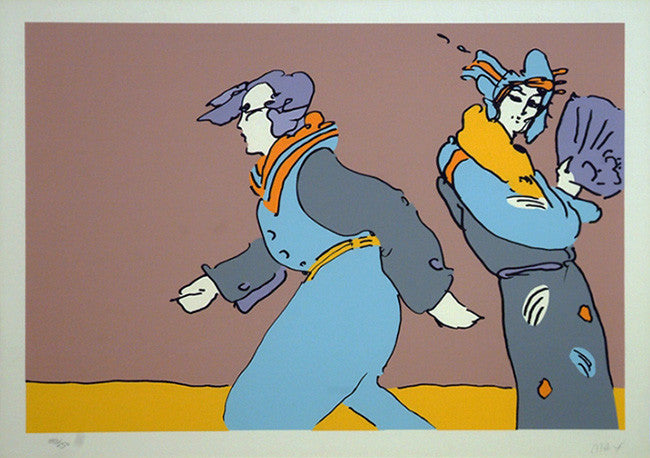
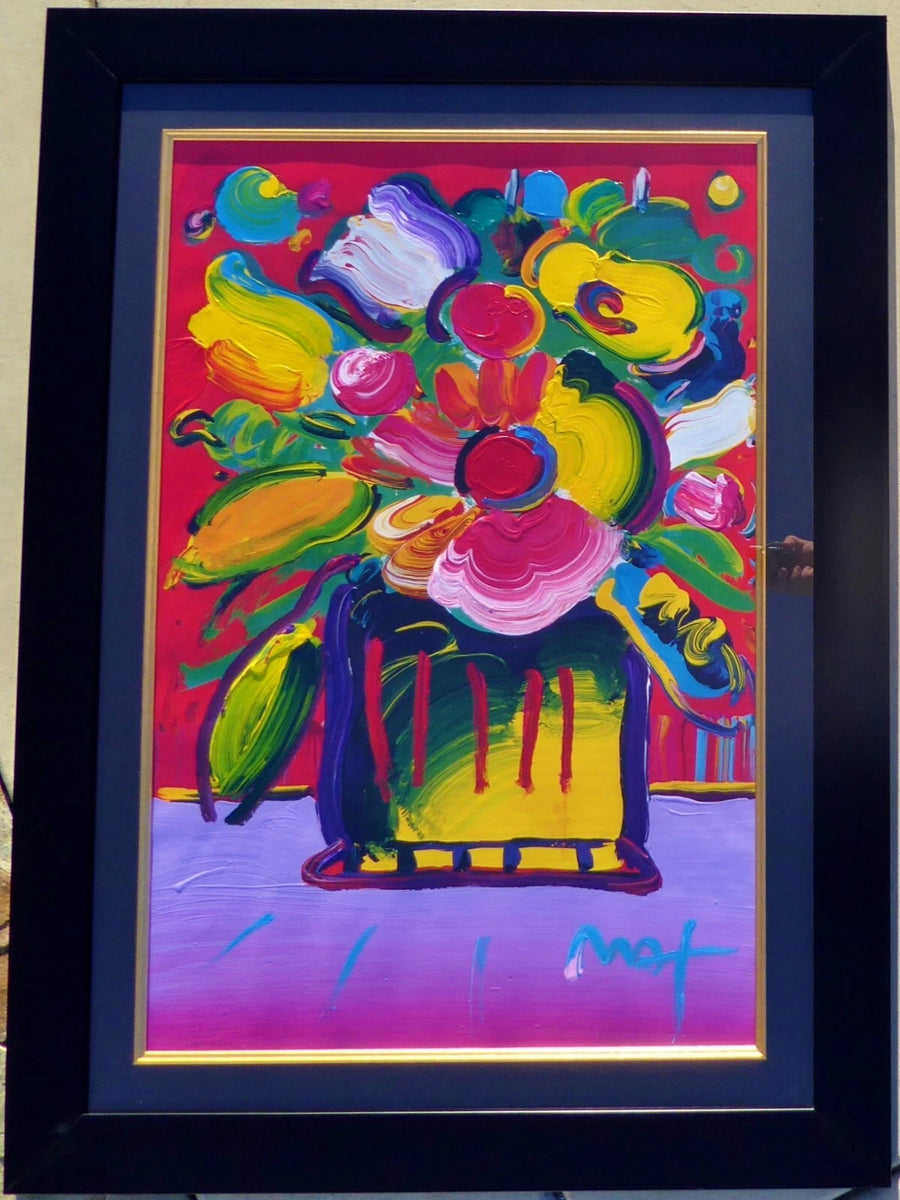
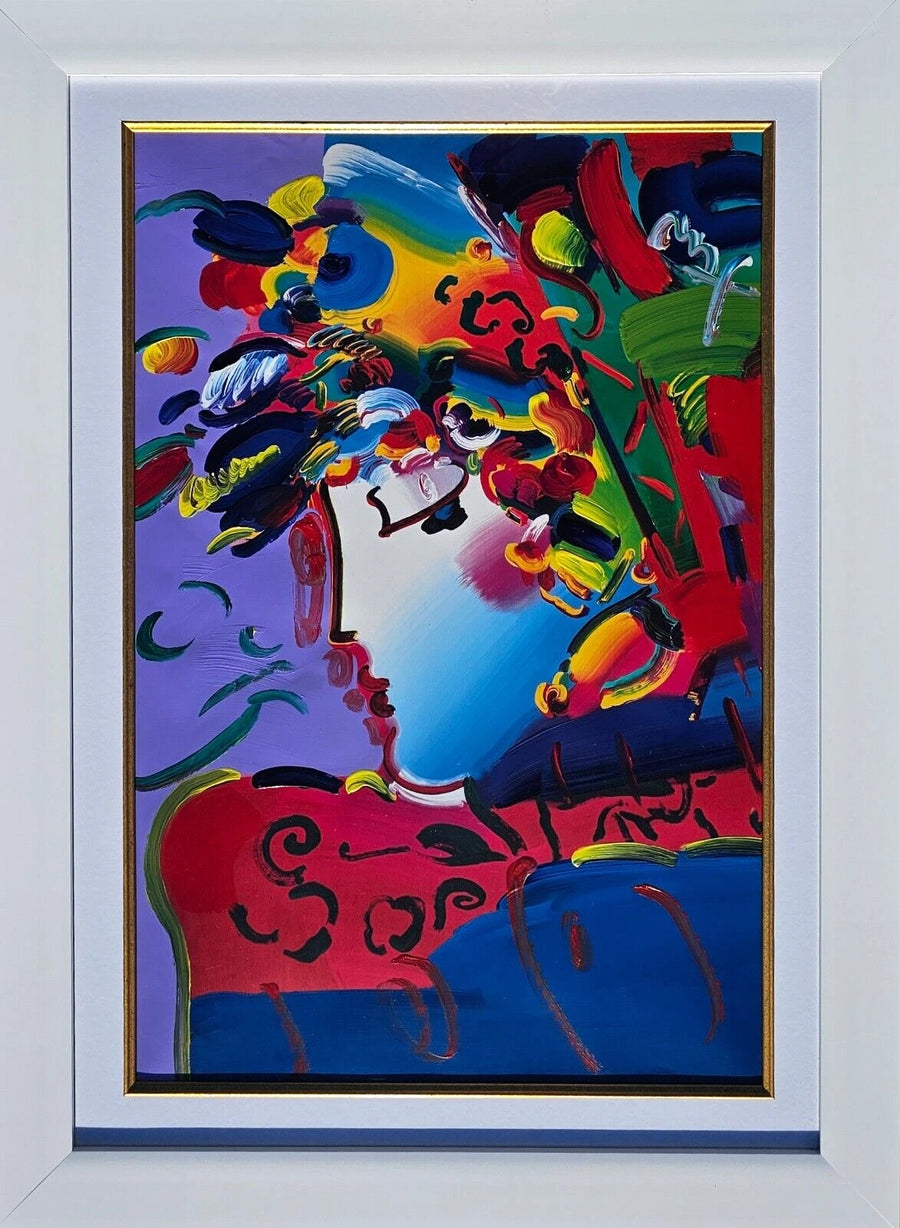
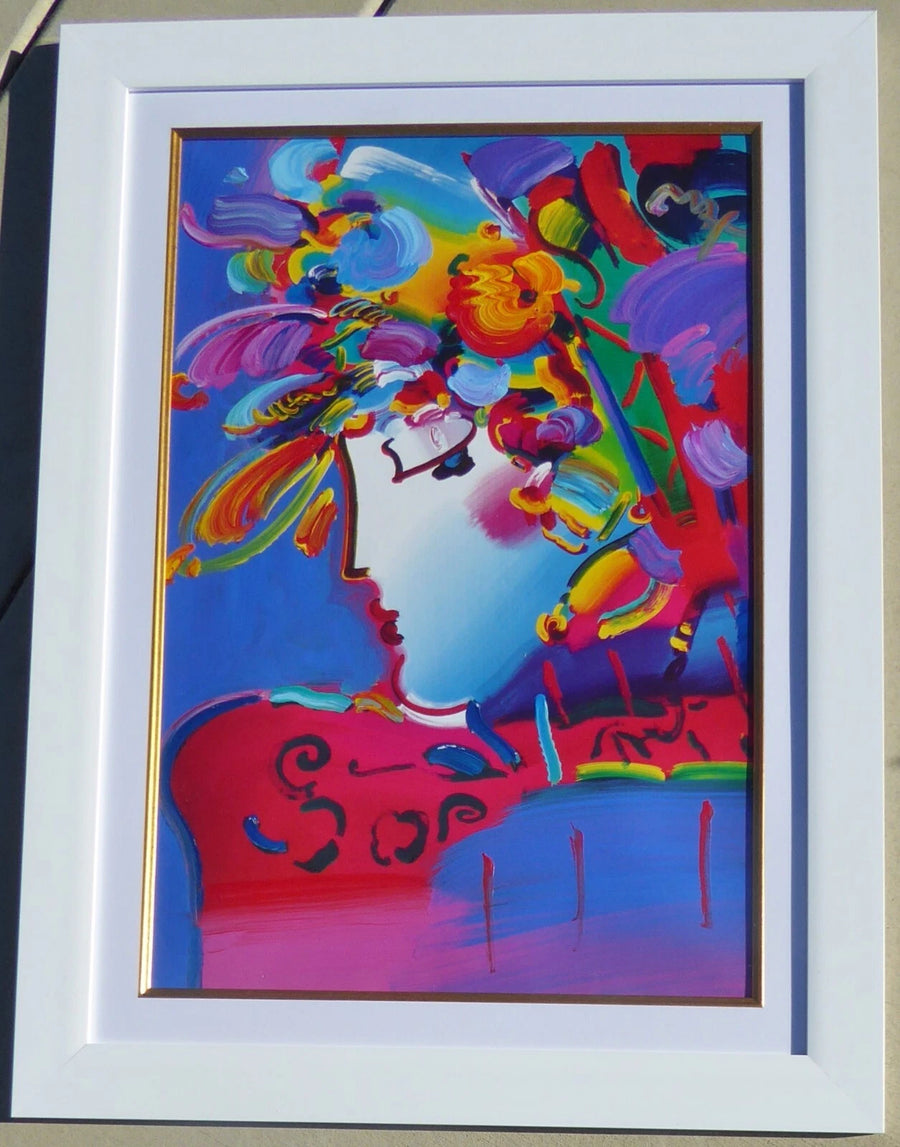
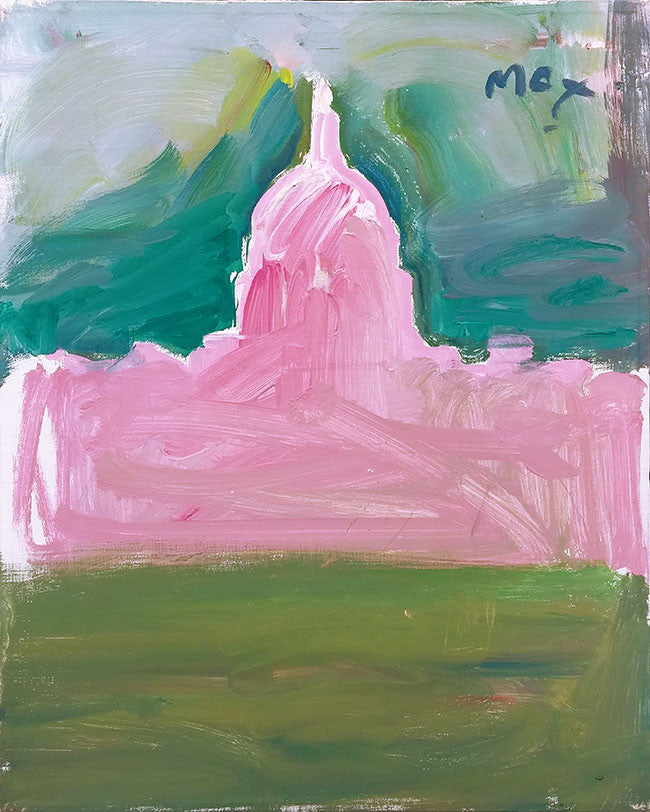
The later paintings shown together here extend that story into the 2000s. Vase of Flowers brings the still life into the exhibition; Mondrian Ladies introduces a named conversation with another part of modern art. Their scale and medium shift attention from the portable printed image toward the presence of a painting. Across these different subjects, Max’s interest in color remained a connective thread.

Vase Of Flowers (Original)
$89,000 · By inquiry
Inquire about this work
Mondrian Ladies (Original)
$44,000 · By inquiry
Inquire about this workVase of Flowers, 2002, and Mondrian Ladies, 2003. Acrylic on canvas.
When counterculture became a public image
The passage from counterculture to public institution was contested. In the 1970s, the General Services Administration commissioned Max to create images welcoming travelers at United States border crossings. Officials hoped contemporary design would project a fresh national image. Customs officials opposed the psychedelic style, associating it with illicit drugs and an anti-establishment culture.
Historian David D. McKinney reconstructs the dispute in Panorama. The project moved through several presidential administrations before Jimmy Carter intervened. The signs were dedicated on July 4, 1978. Their reception exposed a division over what the country should look like when representing itself to the world.
For Max, color and fantastic imagery could communicate welcome. For his opponents, the same visual language carried an unacceptable cultural association. The episode reveals that his accessible, optimistic art was not politically neutral simply because it appeared cheerful. Once placed at a border, its forms became part of a debate about authority, national identity and who belonged within the American picture.
Liberty as a recurring subject
The Statue of Liberty offered Max a different bridge between individual expression and public symbolism. He began his recurring Liberty series in 1976. The Department of State records his painting of six large versions at the White House in 1981 and his contribution to the statue’s restoration campaign. A monument associated with immigration and freedom became a continuing subject for an artist whose own childhood had begun in flight from persecution.
Liberty’s recognizable outline allowed color to change while the subject remained clear. Repetition did not empty the image of meaning; it gave Max a structure he could revisit. His treatment brought a national emblem into the same chromatic world as his other figures and landscapes.
The archival contact sheet above offers another view of that public role. It includes Max presenting a flag painting to George H. W. Bush and Barbara Bush in 1991. Paintings, ceremonies and reproductions were different routes through which his art entered civic life.

Liberty (Sculpture)
$24,800 · By inquiry
Inquire about this workLiberty, 1990. Hand-painted bronze, from an edition of 250.
Looking again in museums
Max’s relationship with museums complicates the familiar contrast between commercial popularity and institutional recognition. His first solo museum exhibition, The World of Peter Max, opened at San Francisco’s de Young Museum in 1970. He returned there in 2007 with Peter Max and the Summer of Love, a title that made the historical association explicit.
The Museum of Modern Art’s collection places his work within the history of graphic design. Its online holdings include Toulouse Lautrec, Untitled (Bob Dylan) and Penney’s Rainbow Lane. The museum also records his inclusion in Word and Image in 1968 and The Modern Poster in 1988.
These settings invite a different pace of looking from the original commercial encounter. A poster once designed to seize attention can be studied for the relationship between lettering, image and pattern. Its original purpose remains part of the object, even as the museum gives it a new context.
The final years and a lasting presence
Max’s final years were affected by dementia. He died on September 14, 2026, at the age of 88; the Associated Press reported the confirmation from his son. Obituaries returned to the extraordinary reach of an artist whose images had appeared on posters, consumer goods, public commissions and large-scale commercial projects.
That reach is part of the work’s history, not simply a measure of fame. Max helped make a particular kind of color-saturated, imaginative imagery familiar to audiences who might never have entered a gallery. His career also shows how a visual language changes as it passes between generations and institutions.
The early posters remain closely connected to the optimism and experimentation of the 1960s. Later paintings and sculptures broaden the view. Taken together, they describe a long engagement with recognizable figures, public symbols and the emotional possibilities of color.

Two Sages 2002
$44,000 · By inquiry
Inquire about this workTwo Sages, 2002. Acrylic on canvas, 36 × 48 inches.
The works in this exhibition
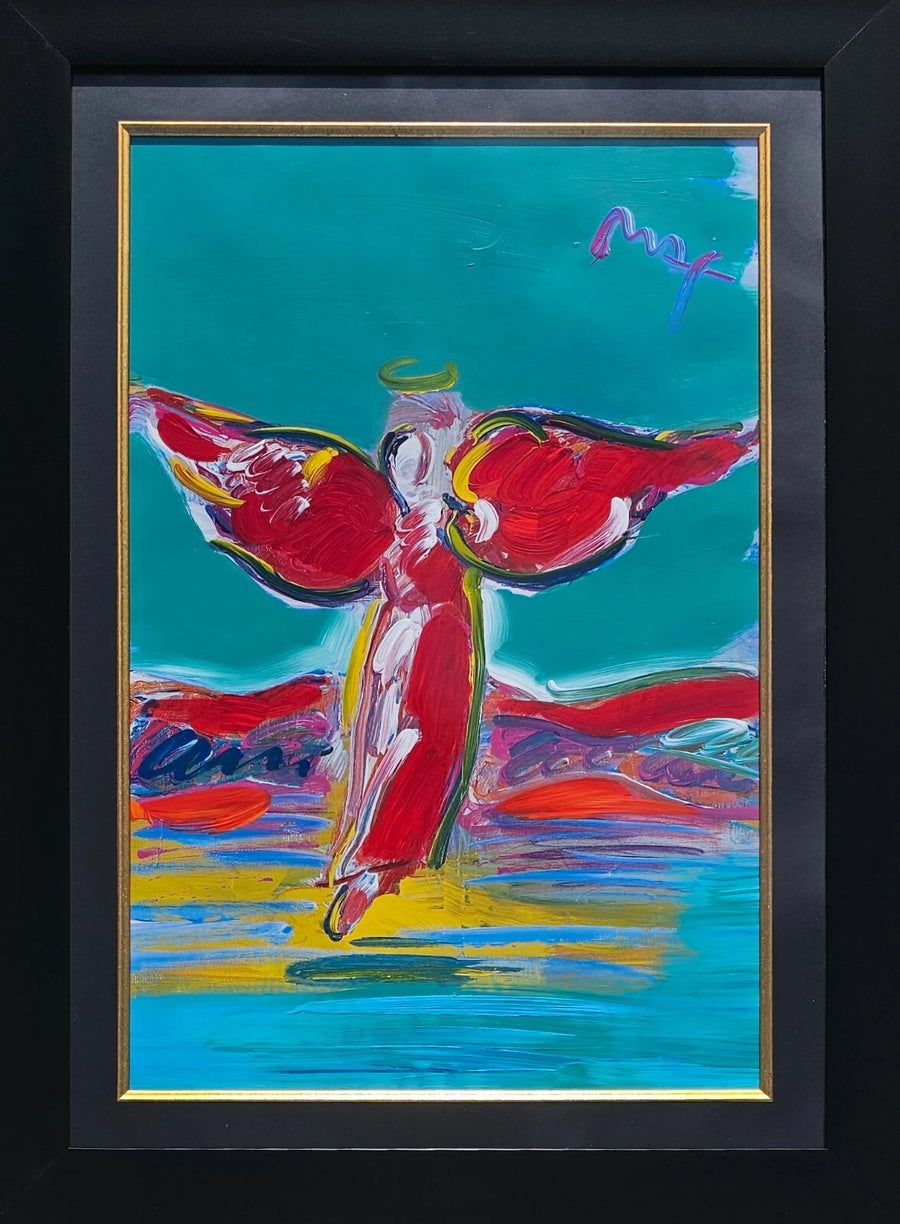
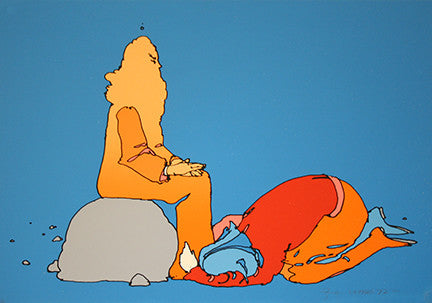
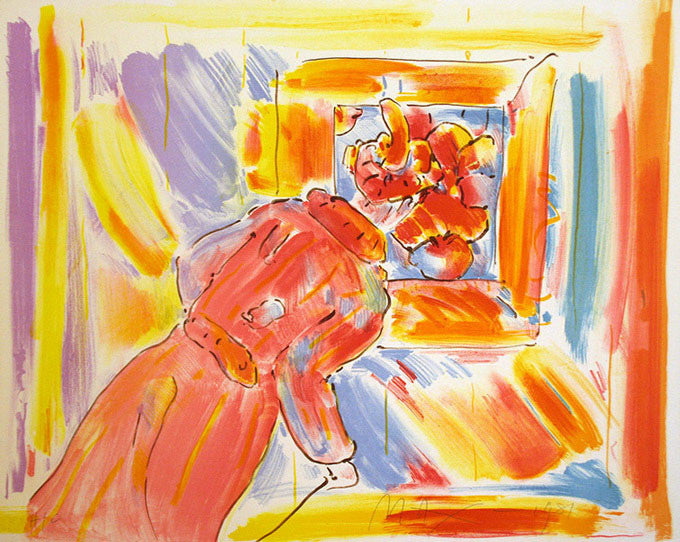
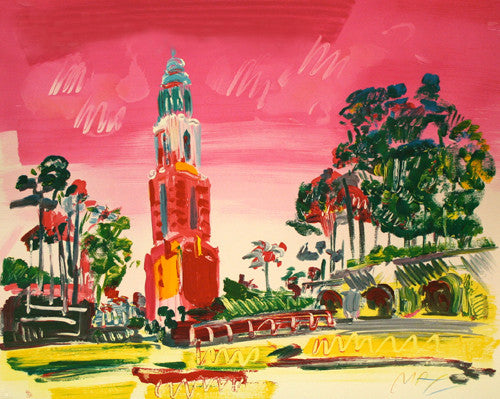
The works gathered here bring that history into contact with individual paintings, prints and sculpture. Cosmic imagery, flowers, portraits and Liberty do not tell the same story, but each offers a route into Max’s visual world. The selection moves between the subjects that made him widely recognizable and the variations that reward a closer encounter.
Explore the available collection below, or follow a featured work to its photographs and details. The historical story continues in the particulars of each object: its medium, its scale, its surface and the image it carries.