



Prints & Editions
Marina Picasso:
Pablo’s Images From the Family Estate
Marina Picasso inherited part of the largest art estate of the twentieth century, and the editions that carry her name put her grandfather's images within reach of collectors today.
Hold a work from the Marina Picasso collection and two things share the sheet: an unmistakable Pablo Picasso image, and the pencil signature of his granddaughter.
That pairing stops a lot of first-time buyers, and it deserves a clear answer. Marina Picasso, born in 1950, is Pablo Picasso's granddaughter, and the collection that bears her name is made up of his compositions, released as limited editions with the approval of his heirs. She inherited these works, chose to share them, and signed each impression in her own hand to stand behind them.
For collectors, that distinction is the whole story. A work from the Marina Picasso collection connects you to Pablo's art through the person who knew it as family property, at a level where owning a piece of that legacy is a realistic plan.
The Granddaughter at the Center of the Story
Marina's grandmother was Olga Khokhlova, the Russian ballerina Picasso married in 1918. Their son Paulo worked for years as his father's driver and assistant, and Paulo's children, Marina and her brother Pablito, grew up in the orbit of a man who was both their grandfather and the most famous artist alive. The arrangement left marks, and Marina has written about them openly since.
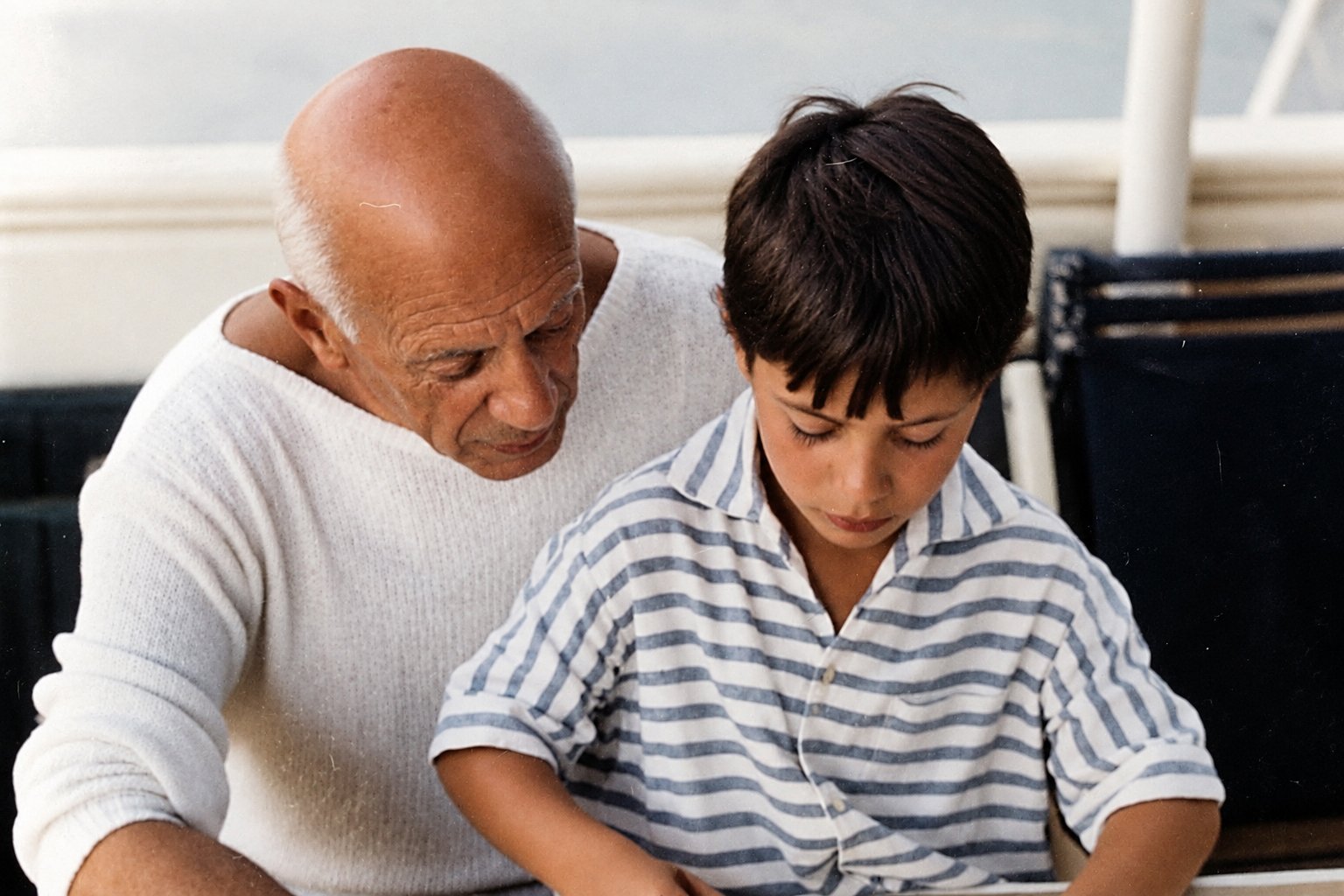
Everything changed in 1973, when Pablo died without a will. French inheritance law divided one of the largest estates in art history among his widow Jacqueline and his children, a group that included Marina's father Paulo and her aunt Paloma. Pablito had died tragically that same year, and when Paulo followed in 1975, his share of the estate passed to Marina and to Pablito's son, Bernard Ruiz-Picasso. Marina's inheritance included a vast body of artworks and La Californie, the villa above Cannes where her grandfather had painted through the 1950s.
In the decades since, she has been one of the estate's most active sellers. Auction houses including Sotheby's have handled sales from her holdings, each one placing more of Picasso's art into private hands. Part of the proceeds has funded her humanitarian work, including a village for orphans she founded in Vietnam.
One edition in the current inventory carries the family story inside the image itself. Paloma en Bleu revisits a 1952 portrait of Paloma, and the listing describes it plainly as a recreation of the oil on canvas. The family likeness quite literally passed down through the estate.
Marina Picasso: The Name on the Print
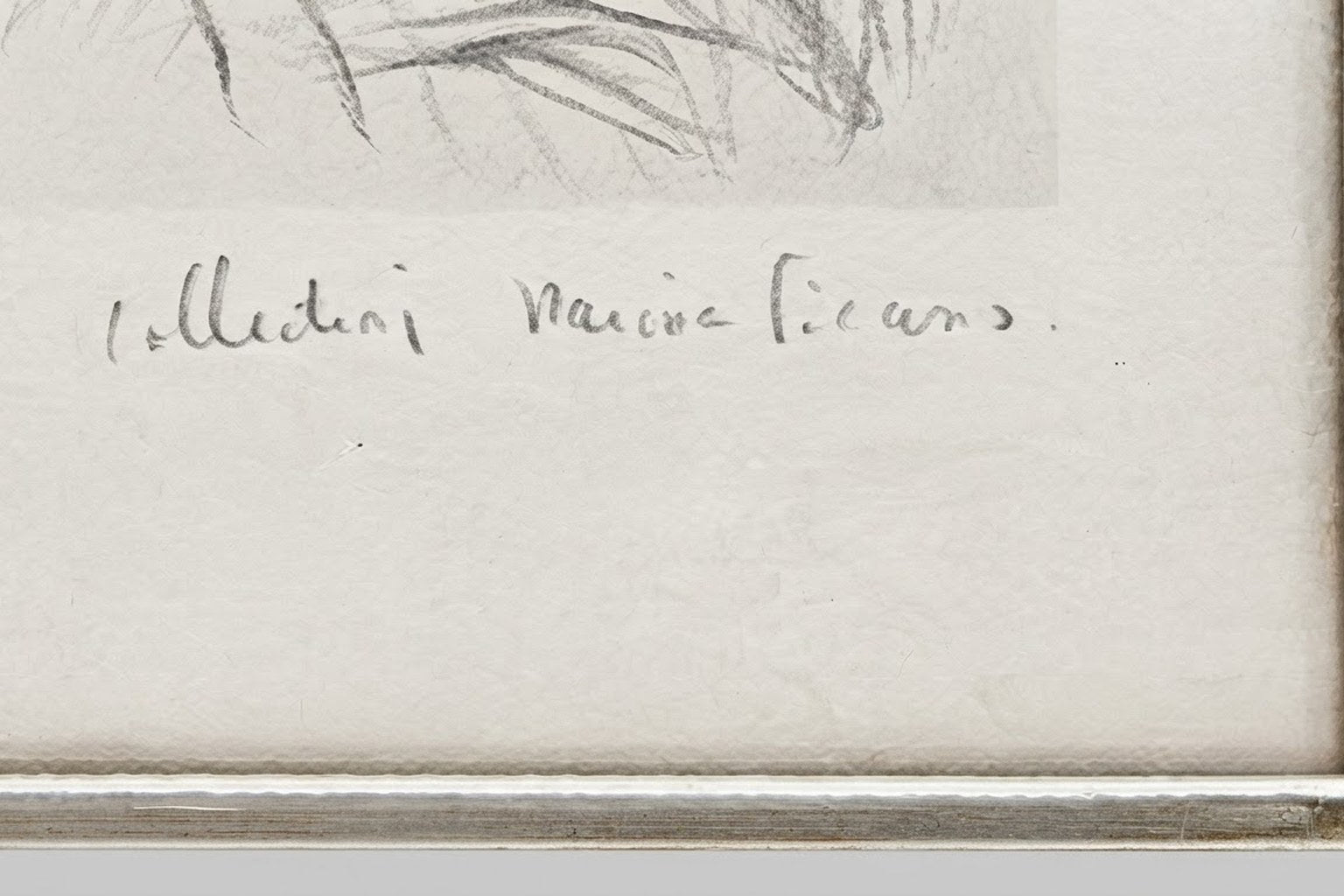
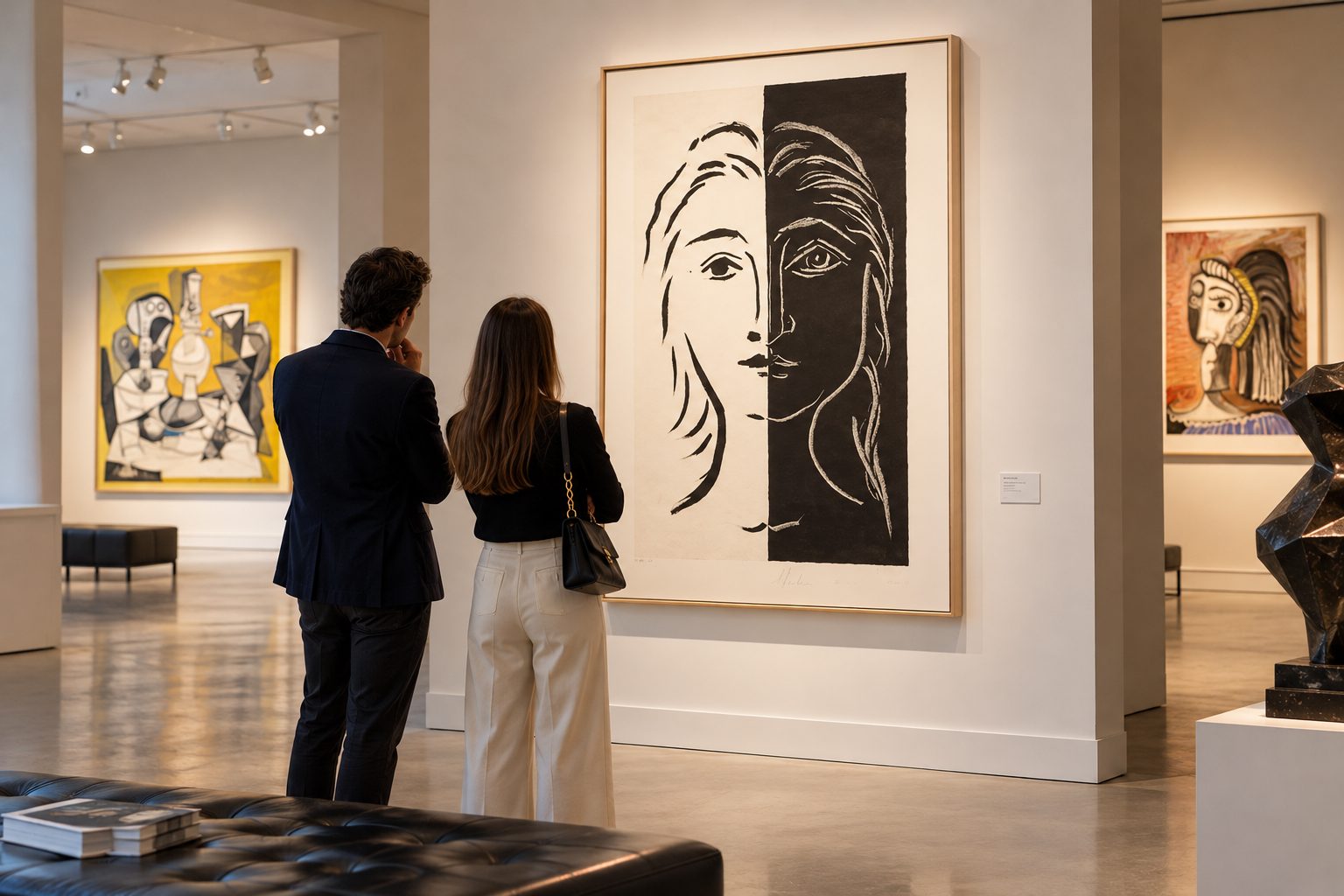
Between the late 1970s and early 1980s, Marina authorized a program of lithographs drawn from works in her inheritance. The pieces you see today, dated 1979 and 1982 in our own listings, come from that project. Each was printed in a limited edition, most often five hundred impressions, many on Arches paper, and each carries Marina's pencil signature and edition number alongside a line that says a great deal in a few words: approved by the heirs of Pablo Picasso.
That approval places these works in a specific category. Picasso made around 2,400 prints during his lifetime, from the Vollard Suite of the 1930s to the 347 Suite he completed in 1968 at age eighty-six, and those lifetime impressions command the top of the market. Below them, estate-authorized editions offer a documented connection to the same images at a fraction of the price, with open-edition posters a further step down. The Marina Picasso designation tells you exactly which tier you are in, and it certifies that the estate stood behind the release.
The subjects reach deep into Pablo's private mythology. The Minotaur, the half-man, half-bull he used as an alter ego across the Vollard Suite, returns in Minotaure et Femme, a 1979 lithograph from an edition of five hundred. Set that image next to its history and you can see what the estate editions do at their best: they keep the imagery of a twentieth-century giant in circulation, honestly labeled, and accessibly priced.
Minotaure et Femme (1979)
See it in our collection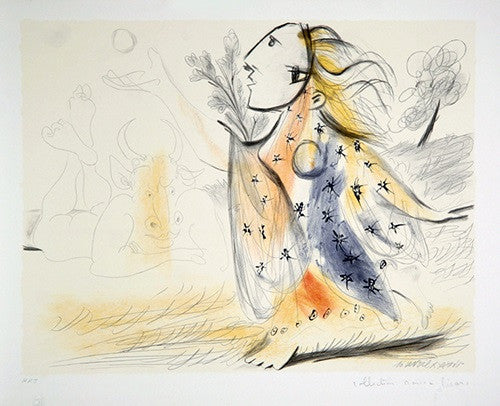
Inside the Collection: From Harlequins to Vanitas Still Lifes
Spend time browsing the inventory and a portrait of Pablo's imagination comes into focus. Harlequins and cavaliers trace back to the circus performers of his early years. Seated women appear again and again, a Femme assise dans un fauteuil here, a girl with a mandolin there, each one a variation on the muses and models who moved through his studios. Still lifes strip the same eye down to fruit, pitchers, and guitars on a tabletop.
Some pieces go darker. Tête de Mort, Lampe, Cruches et Poireaux sets a skull beside a lamp and leeks in the vanitas tradition, a reminder that even Picasso's quietest arrangements were meditations on time. Works like this show the range you actually encounter here, from tender images of children to compositions that stare down mortality.
Tête de Mort, Lampe, Cruches et Poireaux (1982)
See it in our collection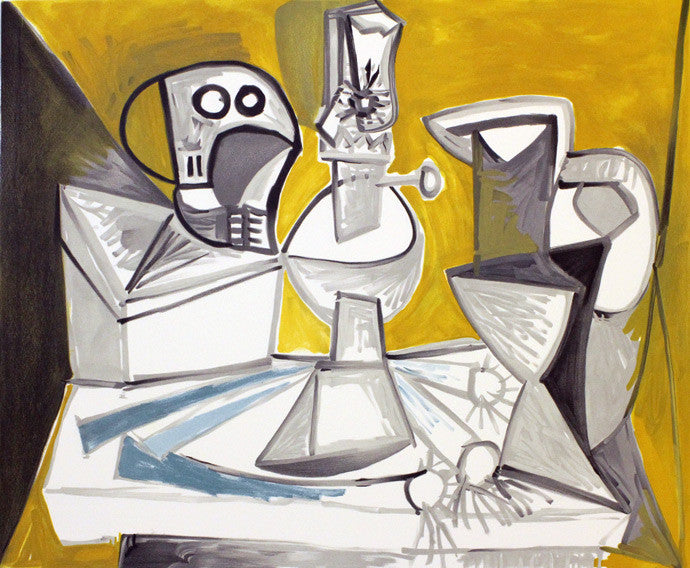
Doves appear, too, the bird Picasso turned into an emblem of peace for the whole twentieth century. However the imagery varies, the object underneath stays consistent: an estate lithograph, pencil-signed by Marina Picasso, editioned, and documented. Once you have seen two or three, you start recognizing the category on sight, which is exactly the kind of confidence a buyer should want.
The Price of a Marina Picasso Estate Edition
Estate editions occupy the attainable tier of the Picasso market. Across the wider market, these estate lithographs change hands for anywhere from a few hundred dollars at regional auction to around $5,000 through established galleries. For a surname attached to sale records in the hundreds of millions, that ceiling surprises people, and the explanation lies squarely in the category.
Edition size does considerable, steady work on price. Most of these lithographs were printed in editions of five hundred, which means supply exists even for famous images. Smaller runs tighten that supply, which is one reason Arlequin en Pied, from an edition of three hundred thirty, rewards a second look. Beyond the numbers, subject, condition, and documentation move individual prices up or down within the band.
Arlequin en Pied (1982)
See it in our collection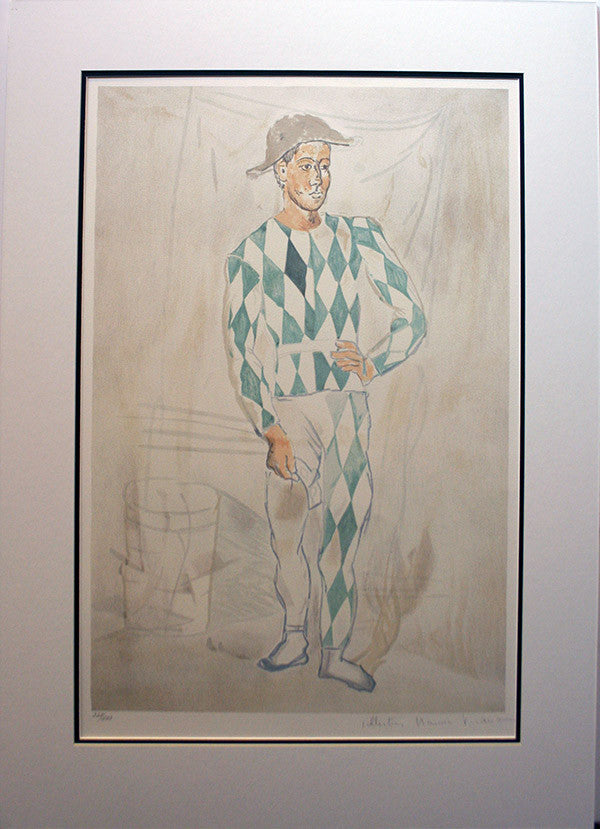
It helps to hold the comparison honestly. A lifetime Picasso print can bring five or six figures at auction, while an estate lithograph from Marina's holdings gives you the image, the provenance, and the heirs' approval for the price of a good watch. We would never tell you a print will appreciate. What we can say is that documented estate editions have traded steadily for over forty years, and that kind of liquidity matters when you collect.
The Details Worth Checking Before You Buy
Verification in this category is straightforward once you know the checklist, and any serious dealer will walk you through it gladly.
Start with the edition fraction in the lower margin, something like 214/500 in pencil, with Marina's signature beside it. Then read the paperwork. The certificate of authenticity should identify the specific work, and the phrase "approved by the heirs of Pablo Picasso" should appear in the listing or documentation, since that line is the designation the whole category rests on. Arches paper, full margins, and clean condition round out the picture; ask for photographs of the sheet outside its frame before you commit.
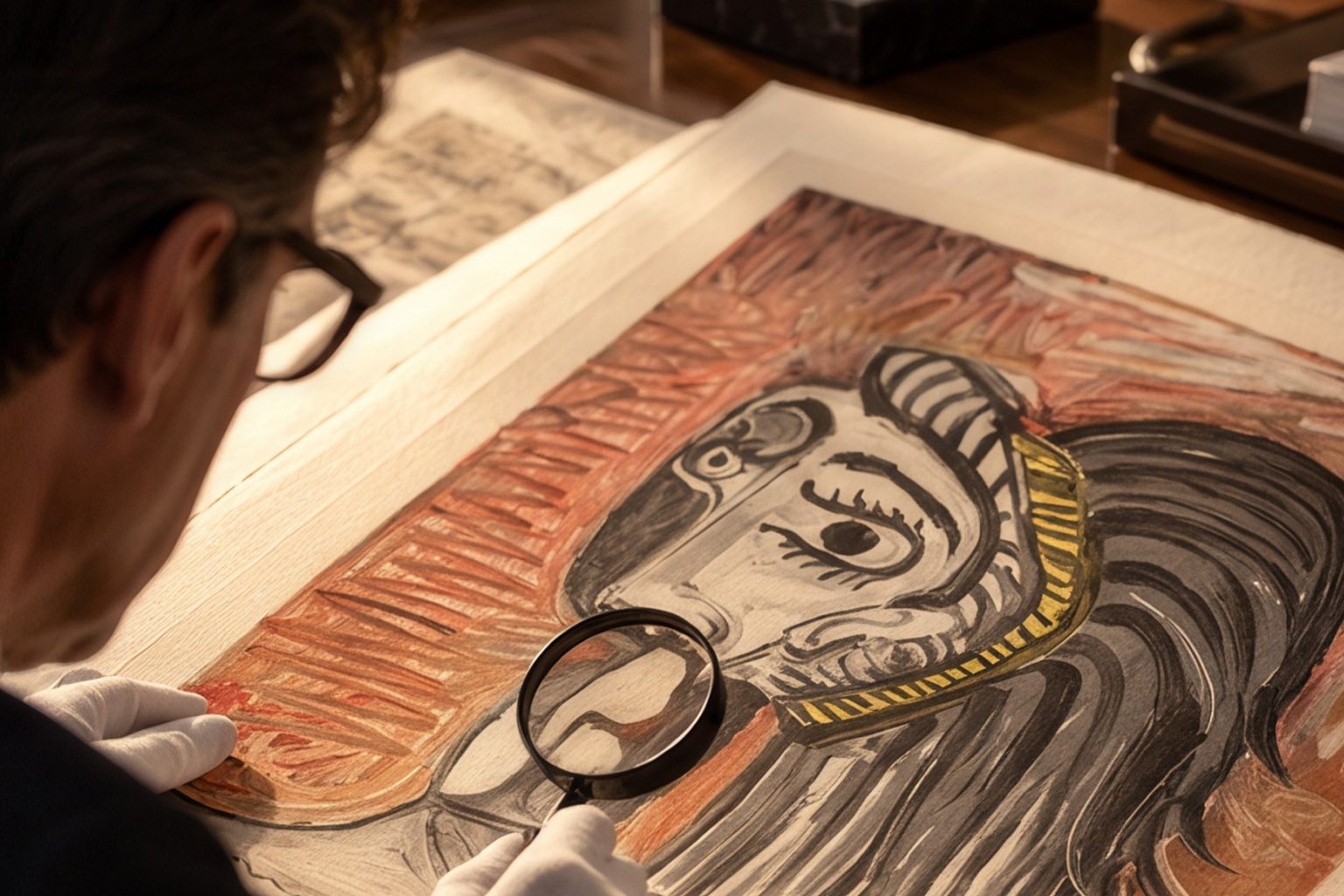
The same habits serve you across the wider field of Picasso prints, where editions, states, and printing histories vary far more than they do here. Learn to read the details on a Marina Picasso lithograph and you have trained your eye for the rest of the market.
Let's Talk About the Piece You're Considering
Every work from this collection that we offer has been examined against its documentation before it reaches the site, and the questions you might bring us are ones we answer often: what an edition number implies, how condition reads on paper from 1979, whether a particular image suits the room you have in mind.
If one of these pieces has caught your eye, or you are weighing a Marina Picasso lithograph you found elsewhere and want a second opinion, reach out to our team. A short conversation now beats a surprise later, and we are glad to talk through any work in the collection, financing included.
FAQs: The Marina Picasso Collection
Can I check a Marina Picasso lithograph before buying it?
Yes. Before you decide, we can send detailed photographs of the sheet, margins, pencil signature, edition number, and verso, so you can check them against the certificate of authenticity. Every piece ships fully insured. Works priced above $10,000 are handled by inquiry, so a conversation is the first step for those.
Do edition sizes and dimensions vary across the collection?
They do. Most of the estate lithographs were printed in editions of five hundred, but some images, such as Arlequin en Pied, come from smaller runs of three hundred thirty. Sheet sizes vary as well, from roughly 17 by 21 inches up to 30 by 22. The listing for each work states its edition, dimensions, and paper, so compare the specific pieces you are considering and ask if a detail is missing.
Can I resell a Marina Picasso lithograph later?
Yes. Estate editions have circulated on the secondary market for decades, and galleries and auction houses handle them regularly. Resale value depends heavily on condition and documentation, so keep the certificate, invoice, and any condition records from the day you buy. A well-documented piece is far easier to place than one missing its paperwork.
Is the signature on these lithographs hand-signed?
Yes, each impression is hand-signed and numbered in pencil by Marina Picasso, typically in the lower margin. Pencil matters because the printing plate cannot reproduce it, unlike a signature printed within the image. When buying, ask for a clear photograph of the signature and edition fraction so you can confirm they match the paperwork.
What should I keep after purchasing a Marina Picasso lithograph?
Hold on to the certificate of authenticity, the invoice, condition photographs, and the original listing description, and store them flat and dry, separate from the artwork itself. If you frame the piece, use archival matting and UV-filtering glazing. That file becomes the work's provenance for whoever owns it after you.