
Andy Mouse III
1986 · screenprint on Lenox museum board
Gallery price
- Size
- 37.875 × 37.875 in
- Year
- 1986
- Signature
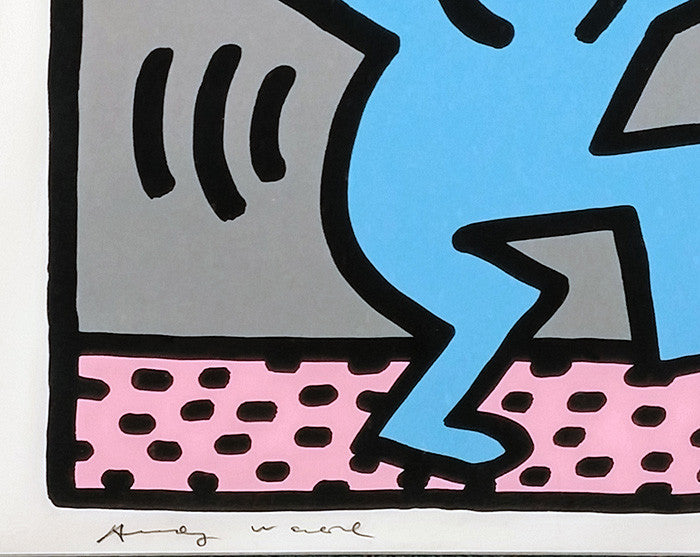
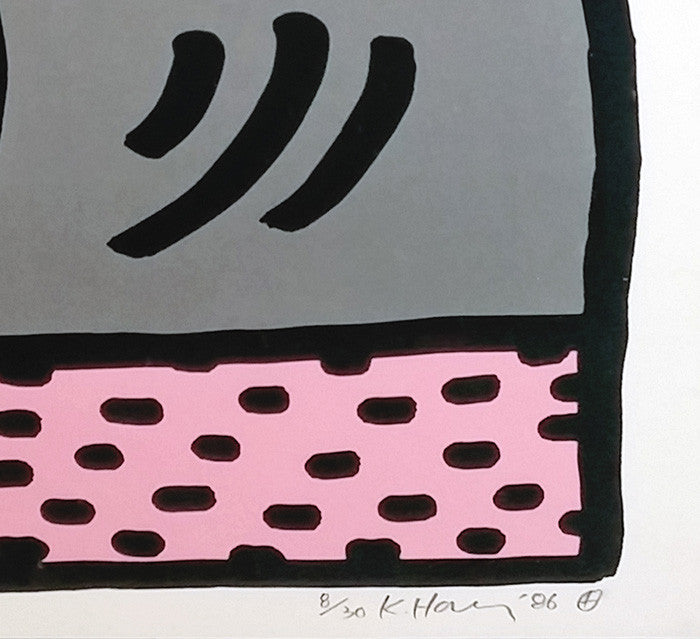
- Hand signed and dated in pencil
Ask about availability, documentation and delivery before arranging your purchase.
Prefer to talk? (786) 963-3888
Ask us which documents accompany this work and request additional photographs before buying.
Edition: 30
Read our shipping and returns policy before purchasing. Eligibility, deadlines and exceptions depend on the transaction.
Contact us to discuss payment arrangements for this work.Read payment and layaway terms.
4 photographs View artwork larger ↗
About this work
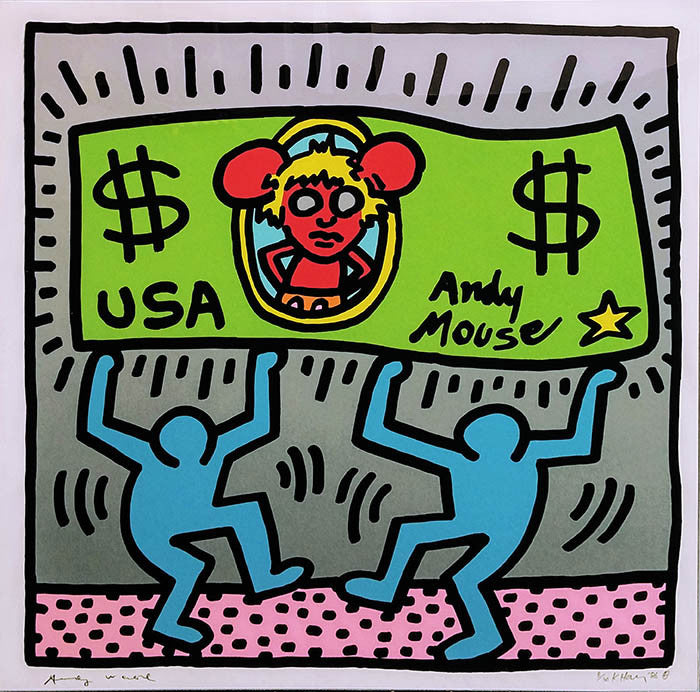
A 1986 screenprint on Lenox museum board by Keith Haring from an edition of 30. Hand signed and dated in pencil by the artist.
From the Andy Mouse Suite. Printed by Rupert Jasen Smith, New York, with his blindstamp. Image: 36 x 36 in. (914 x 914 mm). Sheet: 37 7/8 x 37 7/8 in. (962 x 962 mm). Executed in 1985-86, during an extremely fertile time for Keith Haring, Andy Mouse pays tribute to his close friend, hero and mentor, Andy Warhol, to whom Haring was introduced following his second exhibition in New York at the Tony Shafrazi Gallery in 1984. This historic encounter between Warhol and Haring brought together their mutual fascination with an "Art for Everybody," and an admiration for Walt Disney, a man who inspired both artists. A friendship that developed almost immediately, Haring often visited Andy at the Factory and would trade works with him. Drawing on Warhol's legacy, and similar to Disney, Haring created a world for both adults and children, in which art became a visual vocabulary and one that could be shared with everyone, as seen here on the animated images of Andy Mouse. Believing that cartoon figures could be a component of fine art, and regarding Andy Warhol and Walt Disney as heroes, Haring's exuberant and enchanting Andy Mouse bonded together the work of these three significant artists. Adapting of one the most internationally recognized and celebrated cartoon characters, Haring presents the viewer with his hybrid Andy Mouse cartoon. Andy Mouse originated from a new body of work in which Haring focused on his passion for both drawing and mass production. Sharing with Warhol an understanding of the effect of mass media's visual dynamics, Haring intuitively understood that good mass media imagery could be seen at any size and still make a strong visual impact. By combining Andy Mouse with the repetitive use of the dollar sign, Haring brilliantly manipulates the concept of Pop into his own unique hand- drawn style. Andy Mouse is a brilliant culmination of Haring's entire oeuvre . Its bold graphic quality, complex composition and glorious color are high water marks for the artist. Andy Mouse's large scale and brilliant postmodern referencing of Pop icons such as Mickey Mouse -- by way of Andy Warhol -- mark this as a seminal Haring work which remains relevant to contemporary art today
Choose options
Andy Mouse III
1986 · screenprint on Lenox museum board
Gallery price
- Size
- 37.875 × 37.875 in
- Year
- 1986
- Signature
- Hand signed and dated in pencil
Ask about availability, documentation and delivery before arranging your purchase.
Prefer to talk? (786) 963-3888
Ask us which documents accompany this work and request additional photographs before buying.
Edition: 30
Read our shipping and returns policy before purchasing. Eligibility, deadlines and exceptions depend on the transaction.
Contact us to discuss payment arrangements for this work.Read payment and layaway terms.
4 photographs View artwork larger ↗
About this work
A 1986 screenprint on Lenox museum board by Keith Haring from an edition of 30. Hand signed and dated in pencil by the artist.
From the Andy Mouse Suite. Printed by Rupert Jasen Smith, New York, with his blindstamp. Image: 36 x 36 in. (914 x 914 mm). Sheet: 37 7/8 x 37 7/8 in. (962 x 962 mm). Executed in 1985-86, during an extremely fertile time for Keith Haring, Andy Mouse pays tribute to his close friend, hero and mentor, Andy Warhol, to whom Haring was introduced following his second exhibition in New York at the Tony Shafrazi Gallery in 1984. This historic encounter between Warhol and Haring brought together their mutual fascination with an "Art for Everybody," and an admiration for Walt Disney, a man who inspired both artists. A friendship that developed almost immediately, Haring often visited Andy at the Factory and would trade works with him. Drawing on Warhol's legacy, and similar to Disney, Haring created a world for both adults and children, in which art became a visual vocabulary and one that could be shared with everyone, as seen here on the animated images of Andy Mouse. Believing that cartoon figures could be a component of fine art, and regarding Andy Warhol and Walt Disney as heroes, Haring's exuberant and enchanting Andy Mouse bonded together the work of these three significant artists. Adapting of one the most internationally recognized and celebrated cartoon characters, Haring presents the viewer with his hybrid Andy Mouse cartoon. Andy Mouse originated from a new body of work in which Haring focused on his passion for both drawing and mass production. Sharing with Warhol an understanding of the effect of mass media's visual dynamics, Haring intuitively understood that good mass media imagery could be seen at any size and still make a strong visual impact. By combining Andy Mouse with the repetitive use of the dollar sign, Haring brilliantly manipulates the concept of Pop into his own unique hand- drawn style. Andy Mouse is a brilliant culmination of Haring's entire oeuvre . Its bold graphic quality, complex composition and glorious color are high water marks for the artist. Andy Mouse's large scale and brilliant postmodern referencing of Pop icons such as Mickey Mouse -- by way of Andy Warhol -- mark this as a seminal Haring work which remains relevant to contemporary art today