


Artist Spotlights
Mr. Brainwash Art Through Its Messages
Before the faces and the color, there is a slogan. Follow it, and the whole universe of Mr. Brainwash comes into focus.
Most street art leaves the meaning to you. Mr. Brainwash writes it out. On one of his prints, two children sit on a bench with their backs to us, a dog at their feet and a brick wall in front of them, and across the top of the sheet, in pink spray letters, are the words “Never never never give up!” Nobody has to guess what the picture wants to say.
That is the method behind Mr. Brainwash art: start with a message, then borrow a face the world already loves to carry it. In his hands, that face might be Marilyn Monroe in a jigsaw with pieces missing, Captain America stepping out of a storm of paint, or Banksy’s masked thrower holding a book where the flowers used to be.
This article introduces you to the world of Mr. Brainwash art: who he is, how a man who filmed other people’s art ended up making his own, and what happens inside the pictures. For anyone who feels the pull, the last sections explain what to look for on the back of a piece and how to live with one. Every piece shown here comes from our Mr. Brainwash collection at Premier Pop Art.
A Videographer Who Became an Artist
Thierry Guetta was born in 1966 in Garges-lès-Gonesse, France, and moved to Los Angeles with his family at fifteen, after his mother died. He opened a vintage clothing store and kept a video camera running, filming friends, relatives, and strangers until he had hours of footage. On a trip to Paris, he learned that his cousin was the street artist Space Invader, and he began following him around with the camera.
From there he filmed other street artists, Shepard Fairey and Banksy among them. The 2010 documentary Exit Through the Gift Shop, directed by Banksy, tells what happened next: according to the film, a casual remark from Banksy sent Guetta off to make art himself. People have argued ever since about how much of that story to believe, and nothing in this article depends on settling it. The man with the camera put it down and became Mr. Brainwash.
Banksy’s images did not stay on the other side of the camera. Mr. Brainwash later made versions of one of the most famous of them, the girl reaching for a red heart balloon, and the full story of that picture is in our essay on Girl with Balloon.
A Show That Made a Slogan Famous
His first solo show, Life Is Beautiful, opened on June 18, 2008, in a former television studio in Hollywood, and the line for it stretched down the street for blocks. Inside, visitors walked through installations on a vast scale: a twenty-foot robot, a pyramid made of twenty thousand books, and a life-size recreation of Edward Hopper’s Nighthawks. The exhibition was planned for two weeks. It ran for three months, and tens of thousands of people came.
After that, the title became his slogan and his signature, the phrase that now runs through his work.
In 2009 Madonna asked him to design the cover of her album Celebration, and he made fifteen pieces of art for the album, its DVDs, and its singles. In February 2010, he filled a Meatpacking District warehouse in New York for his first New York solo show, Life Is Beautiful: Icons. Every one of these projects carried the same belief, one you could feel without any explanation: optimism is worth making loudly, in big letters, for as many people as possible.
Message First, Face Second
Warhol started from pictures, and Mr. Brainwash starts from a message. Spend an afternoon with his visual language, and you begin to notice the order of operations.
The message arrives first, in spray-paint letters or in the title itself: life is beautiful, love is the answer, never give up, follow your dreams. Only then does a face the whole world already knows step in to carry it, and the face sets the mood, with glamour for one slogan, strength for another, and a wink for a third.
Around the message and its messenger, the surface keeps working, with torn paper, newsprint, drips, splatters, and layers of silkscreen.
The result is Mr. Brainwash art in a sentence: pop art with the energy of the street, a mission statement, and an aesthetic you can spot across a room. Hearts turn up in his work almost as often as slogans do, and he treats them just as plainly.
Keep three questions in your pocket for the six pieces ahead: what is the message, who is carrying it, and what is the surface doing? Each work answers them in its own voice, and the answers, gathered together, begin to draw the map of his world.
Two Works Where the Words Do the Talking
Some pieces make the message impossible to miss, and two of them take opposite routes.
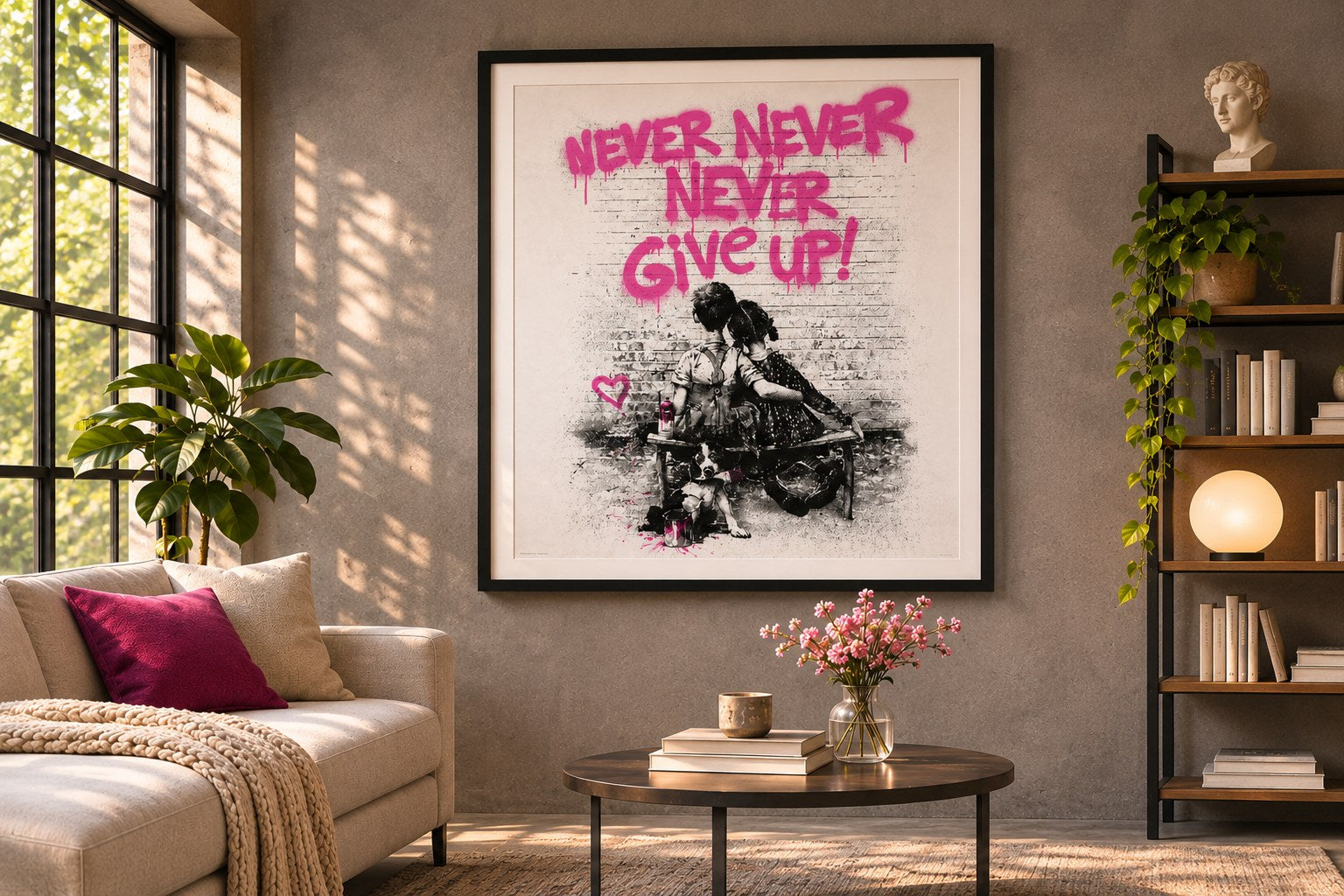
Don’t (Never) Give Up (Pink) keeps the faces out of it. The two children on the bench never turn around, so what we get is their backs, close together, and a dog at their feet.
The image is black and white and a little worn, like a photograph found in a drawer, and the pink lettering above is anything but. The children are still, the words are loud, and somewhere between the two you decide who is encouraging whom. It is a 2020 silkscreen print from an edition of 75.
Don’t (Never) Give Up (Pink) (2020)
See it in our collection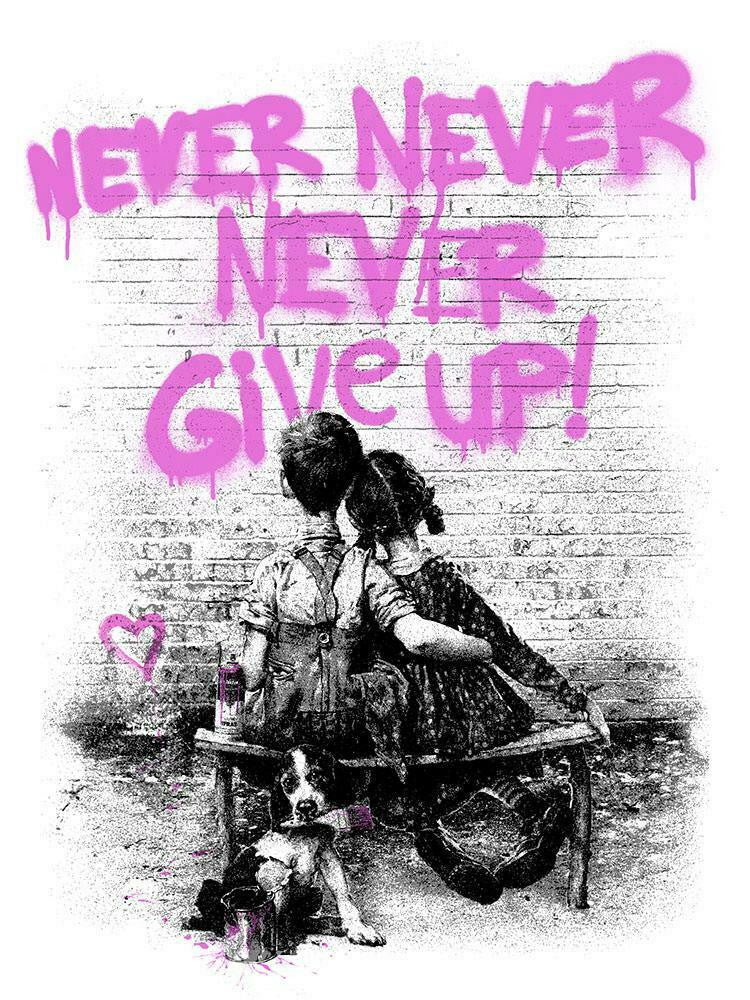
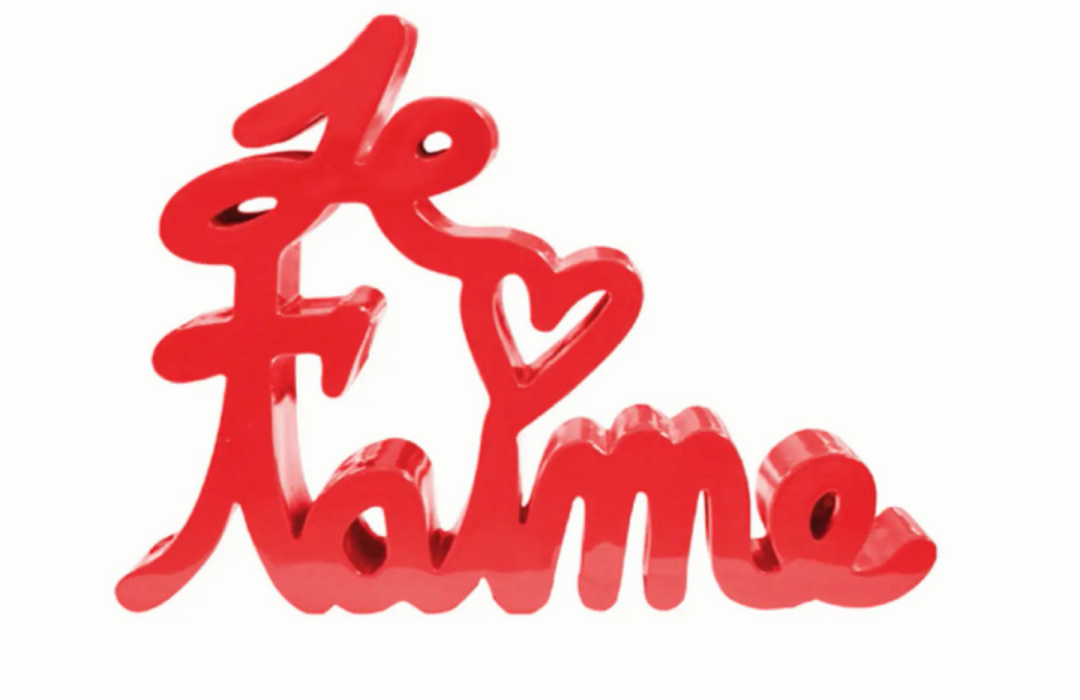
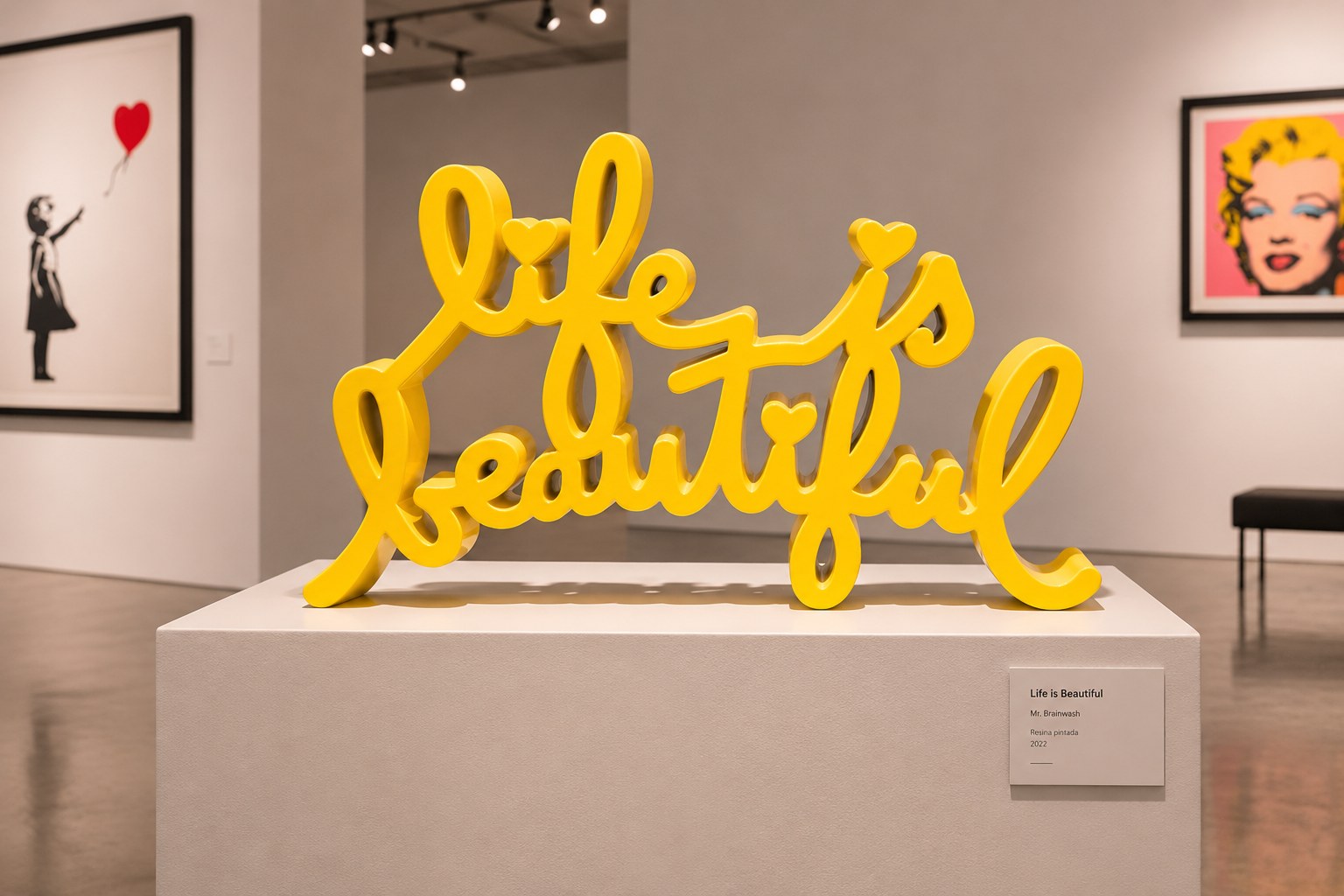
Life Is Beautiful Sculpture (Yellow) removes the picture altogether. The slogan stands on its own in looping yellow script, cast in resin and thermally coated, about twelve inches wide, small enough for a shelf and bright enough to stop a conversation.
Nothing carries the message here, because the words are the work. If Mr. Brainwash has a logo, this is it, and this one comes from an edition of 70. If you are curious about how sculpture editions work, our article on pop art sculpture covers materials, edition numbers, and display.
Life Is Beautiful Sculpture (Yellow) (2022)
See it in our collection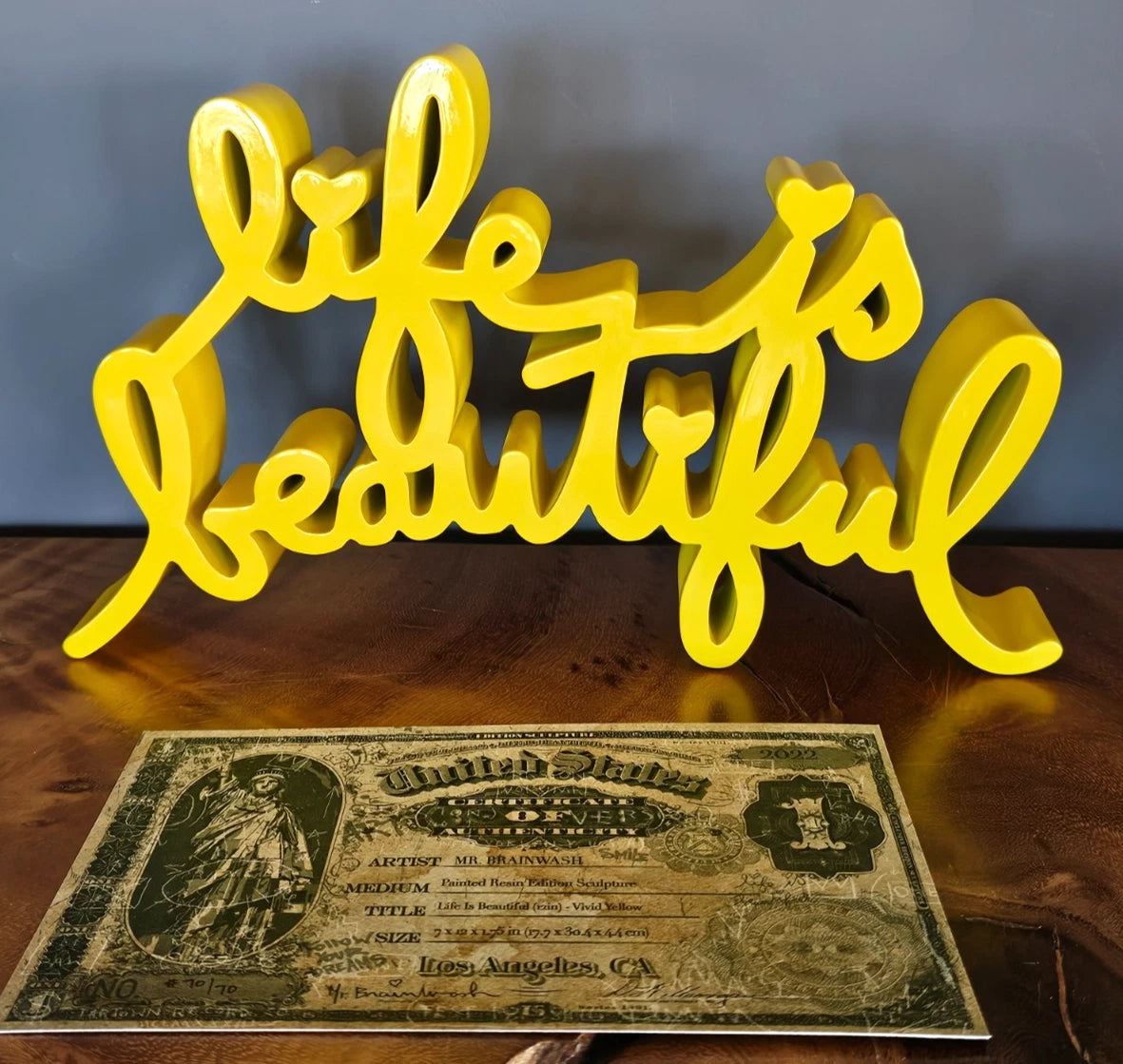
Borrowed Faces
Art history has a long habit of borrowing the faces and imagery everyone already loves, and Mr. Brainwash joins the habit with a few twists.
Marilyn Monroe comes first. Warhol turned her into flat blocks of color in the 1960s, and A Piece Of Legend (Green) (Marilyn Monroe) speaks in that same key: pink skin, yellow hair, blue eyeshadow, red lips.
But this Marilyn has been broken into a jigsaw puzzle, and pieces are missing. The face is almost there and not quite, which is how legends tend to work, assembled piece by piece and never finished. It is an 11-color screen print from an edition of 100, made by Mr. Brainwash in conversation with Warhol’s famous art.
A Piece Of Legend (Green) (Marilyn Monroe) (2024)
See it in our collection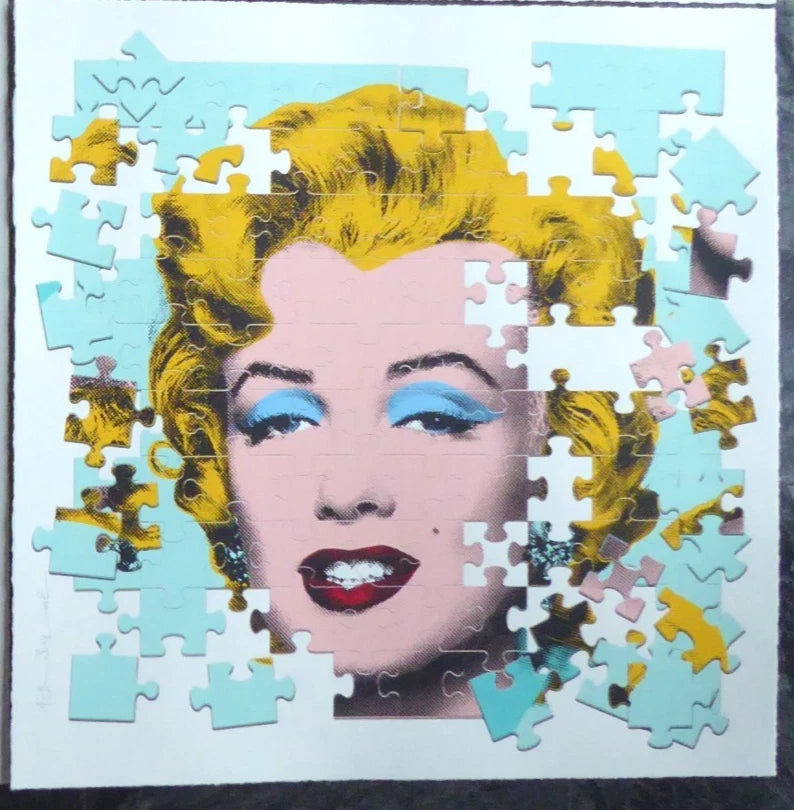
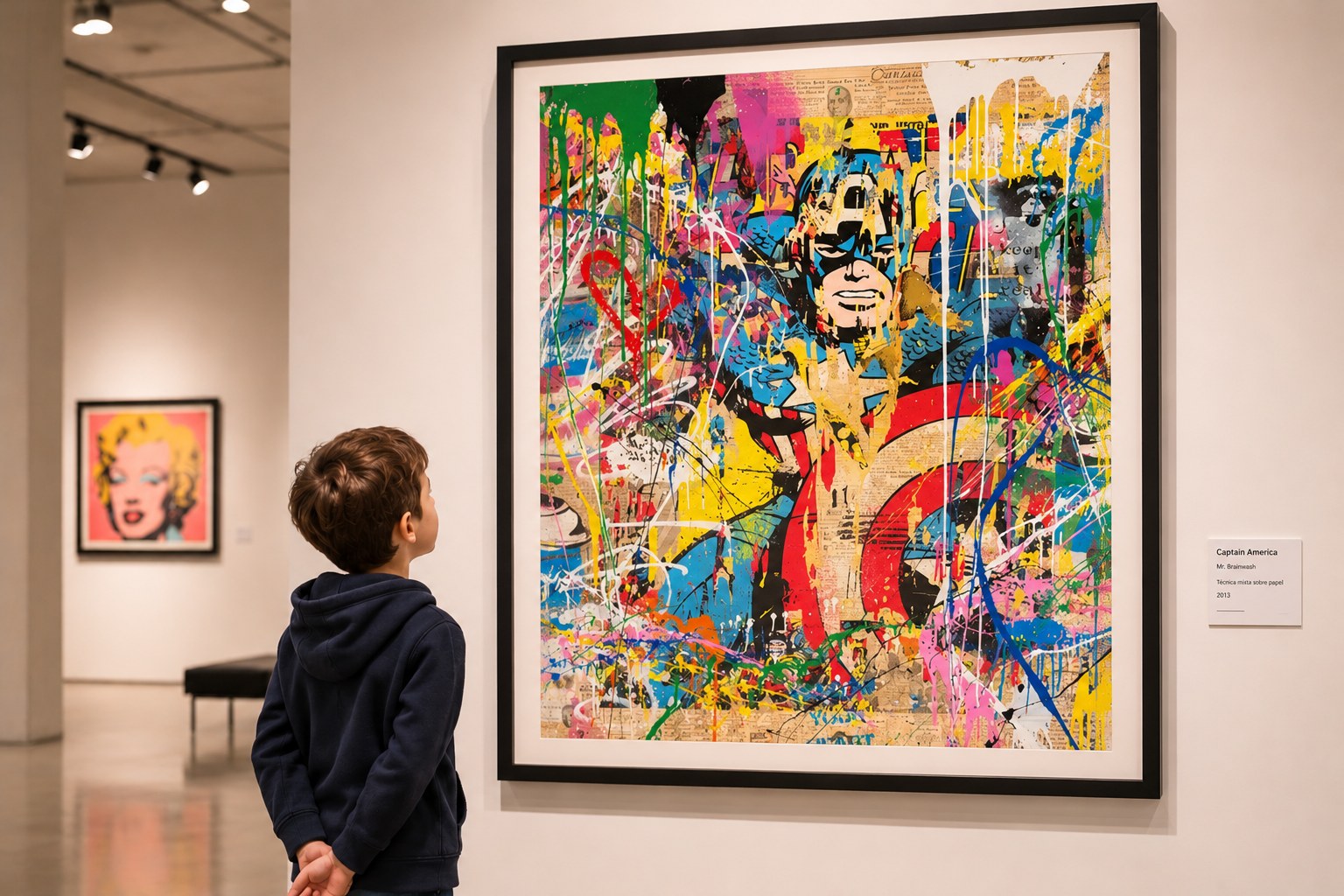
Captain America comes from a different shelf, the comic-book rack. In Captain America (Original), the hero’s masked face rises out of layers of paint and torn newsprint, as if a man were stepping out of a storm of color, and the whole work stands just over four feet tall. Where Marilyn carries glamour, Captain America carries strength, and the surface matches him: loud, layered, and in motion. It is a 2018 unique work in mixed media on paper.
Captain America (Original) (2018)
See it in our collection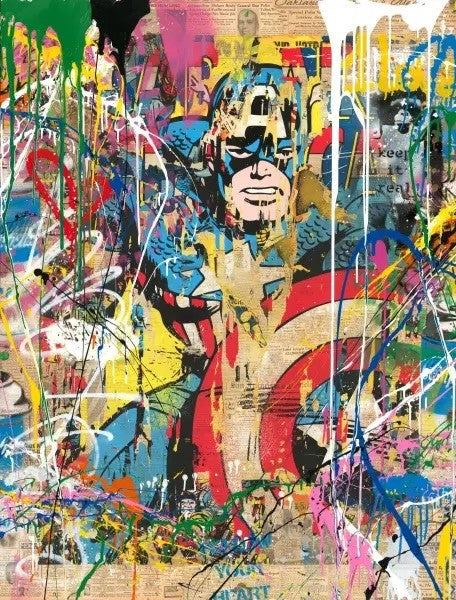
Street Art Answering Street Art
Mr. Brainwash came up among street artists, and some of his pictures answer them directly, through references to their most famous images.
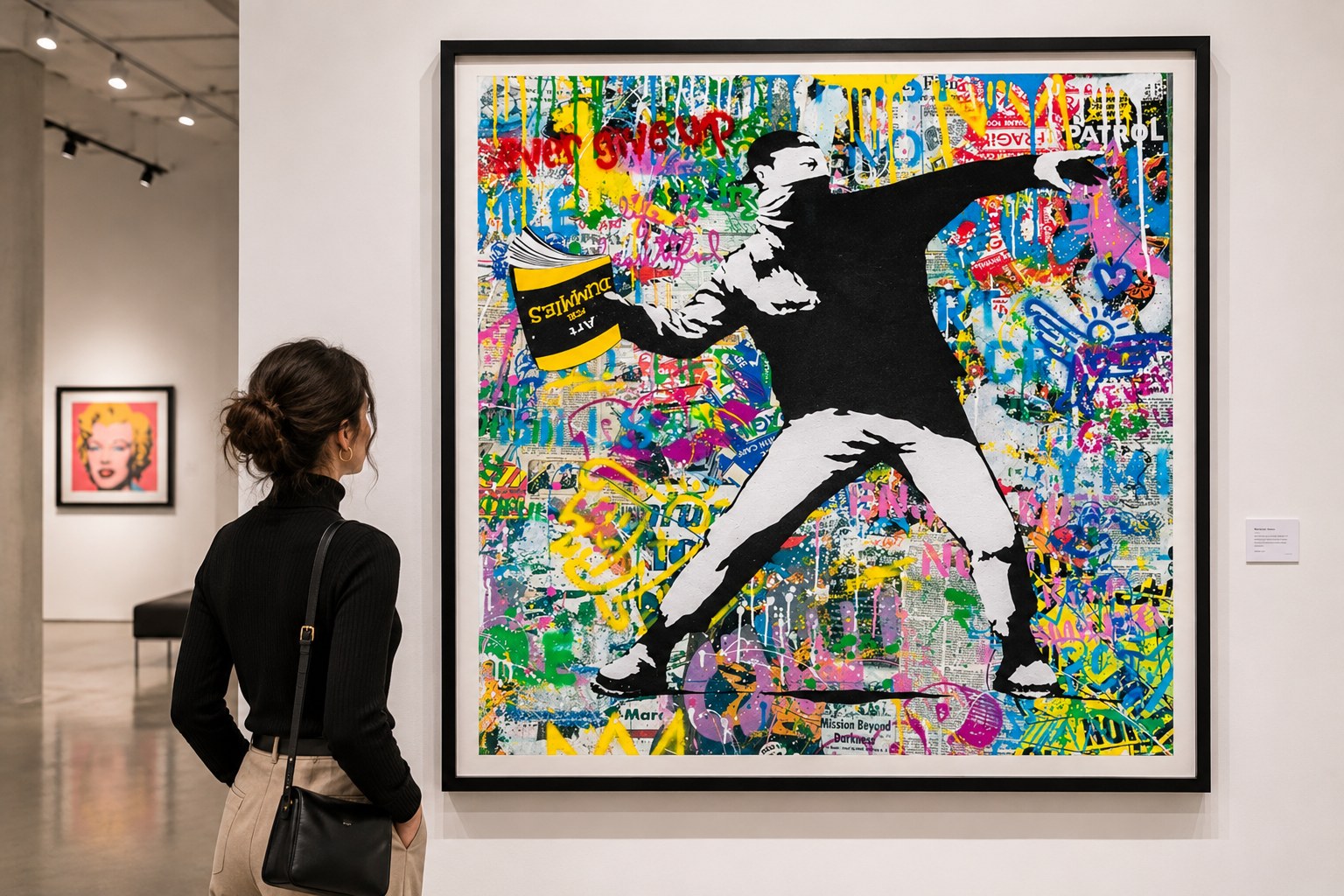
Banksy’s masked thrower is one of street art’s most recognizable figures: a man in mid-throw, face covered, hurling a bunch of flowers where you would expect a stone. In Banksy Thrower ! Never Give Up (Original), Mr. Brainwash lifts the figure into a wall of color and changes what leaves the hand: a book titled Art for Dummies.
It lands as a wink at Banksy and at anyone who thinks street art needs a manual, and the title keeps his own message in the frame. The figure is Banksy’s, and the work is Mr. Brainwash’s, a 2020 unique work in mixed media on paper. For Banksy’s own work and how to buy it carefully, see our article on Banksy art for sale.
Banksy Thrower ! Never Give Up (Original) (2020)
See it in our collection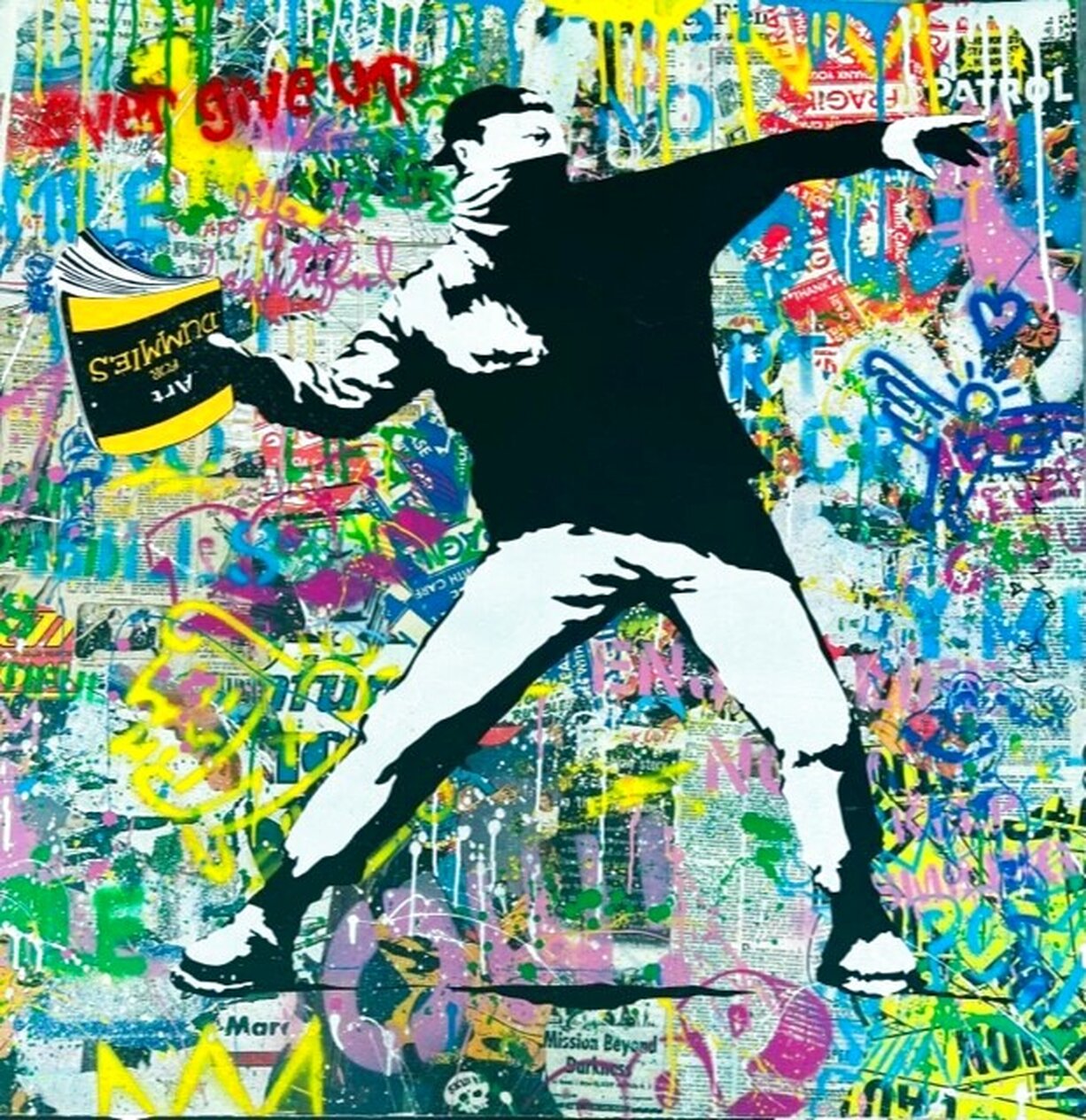
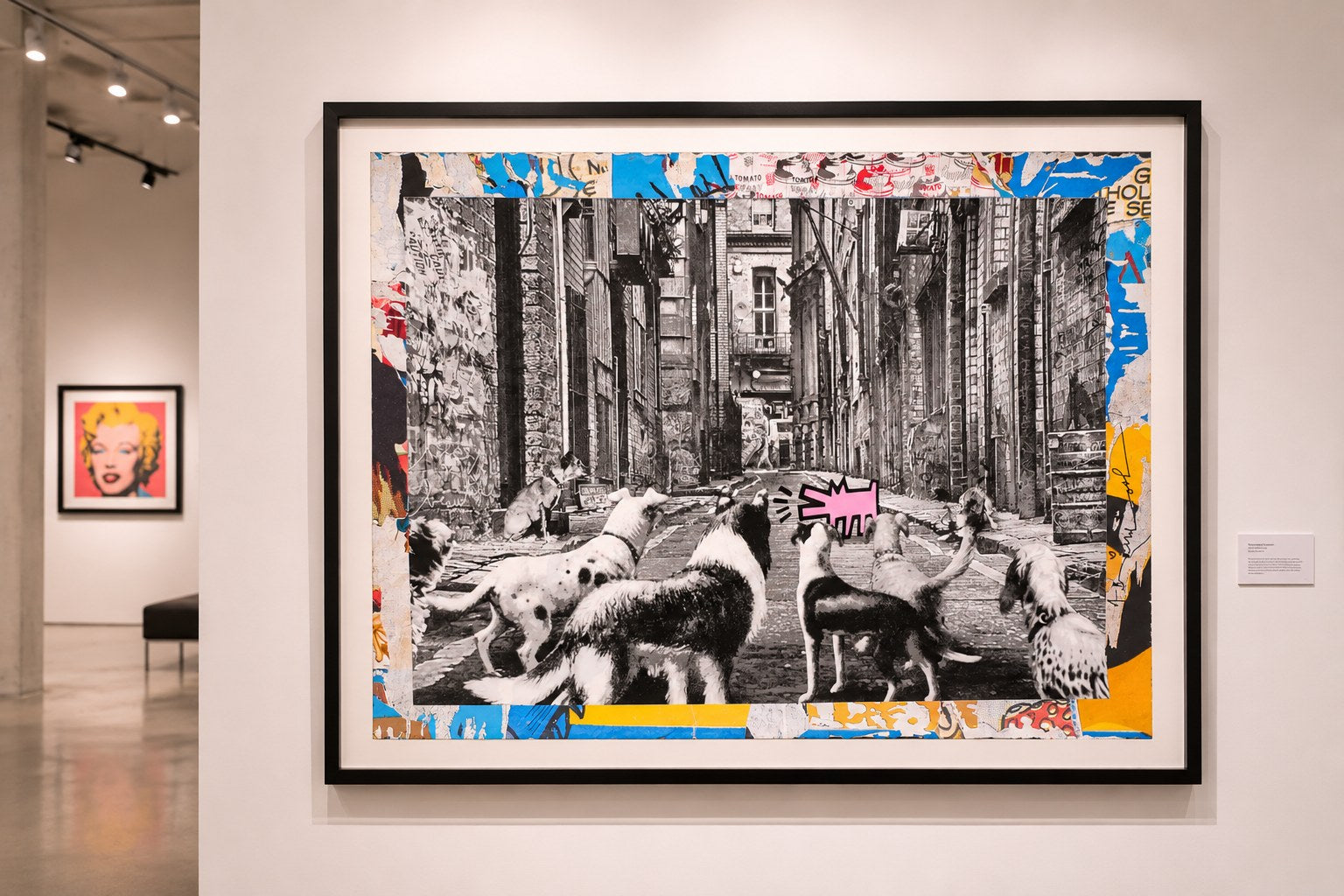
Alley Dogs (Pink) (Original) is gentler. A narrow alley of old brick runs away from us in black and white, a pack of dogs stands with their backs to us, and far down the alley a small pink dog, drawn in the manner of Keith Haring, seems to bark at them.
A frame of torn posters and graffiti wraps the whole scene. It feels as if a cartoon wandered into a documentary photograph, and the real dogs are the ones who noticed. The barking dog is one of Haring’s most recognizable symbols, and for his own editions you can turn to our article on Keith Haring prints.
Alley Dogs (Pink) (Original) (2022)
See it in our collection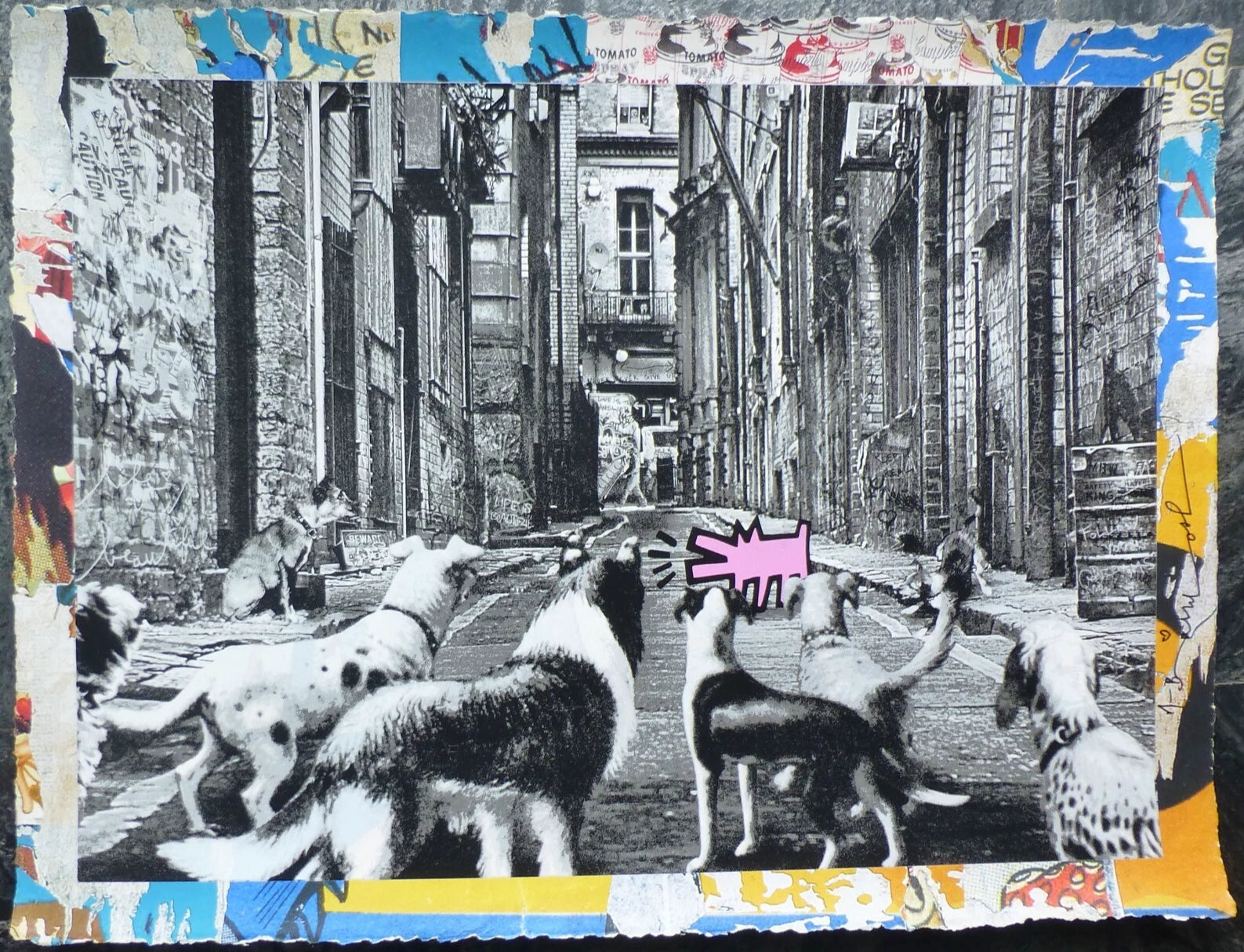
What Is on the Back of Mr. Brainwash Art
Sooner or later the pictures raise a practical question: what exactly would you own? Mr. Brainwash works in two registers. His unique works, usually mixed media on paper, layer silkscreen with spray paint, collage, and hand-applied color, so no other copy exists.
His editions, screen prints and sculptures in resin or metal, are made in a set number and numbered, which means a mark like 12/75 identifies the twelfth impression in an edition of seventy-five. Our article on limited edition prints shows how collectors weigh those numbers.
His signing system gives you several marks to compare: a hand signature, a thumbprint, a number in the style of a dollar bill, and his Life Is Beautiful mantra, often written on the back. The number should match the one on the certificate. Many of his works carry the thumbprint on the back, and any seller should tell you whether a certificate comes with the piece. Our listings state when one is included. The signature should be made by hand, since a signature printed as part of the image is a different thing.
Where a listing includes a certificate, it completes the check. It should name who issued it and say whether you hold the original or a copy, and its number should agree with the number on the work. A signature alone settles nothing, so the marks and the paperwork have to be weighed together.
Condition does the rest. His unique works and prints live on paper, and paper reacts to light and handling, so look for fading in the brightest colors, creases, foxing, and worn edges, and look at the back as closely as the front. Sculptures call for a different eye, on the surface, the corners, and the signature underneath. Clear photographs of the front, back, and edges, and a condition report from us before you buy, are a normal part of choosing any piece.
Making Room for Mr. Brainwash Art
His work asks for space and light, though not in the same way. Pieces on paper belong on a wall out of direct sun, framed with archival materials and glazing that filters ultraviolet light, because bright color is what sunlight fades first. Larger works need a wall that can carry them and enough distance to step back, since the detail lives in the layers up close and the message across the room.
Sculptures bring the slogan down to eye level. A resin script wants a shelf, a console, or a desk where it can catch the light, on a stable surface away from heat and damp.

Choose the Message You Want to Live With
Every piece in this article is a message you could hang on a wall: keep going, love wins, life is worth the trouble. Choosing one is a personal decision, and the practical side should never keep you from it.
If one of these works stopped you, tell us which, and our team will go through the listing and the paperwork with you and answer your questions about the work. Write to us with the one that stayed with you, and we will help you take the next step.
Contact Premier Pop Art about Mr. Brainwash
FAQs: Mr. Brainwash Art
Who is Mr. Brainwash?
Mr. Brainwash is the working name of Thierry Guetta, a French-born artist based in Los Angeles. Born in 1966, he ran a vintage clothing store and filmed street artists, Banksy among them, before making his own work. His first show, Life Is Beautiful, opened in 2008, and his pieces mix pop-culture icons, graffiti, and upbeat slogans.
What does “Life Is Beautiful” mean in his art?
It is his mantra, the title of his first show, and the first of four messages he repeats: life is beautiful, love is the answer, never give up, and follow your dreams. The phrase often appears on the back of his works. The optimism it names runs through his titles, lettering, and sculptures.
How can you recognize an authentic Mr. Brainwash?
Look for a hand signature, a thumbprint, and a number in the style of a dollar bill that matches the certificate, often with his slogan on the back. Compare those markers with the paperwork, confirm who issued the certificate, and ask what condition details are on file. A signature alone is not proof of authenticity.
What is the difference between a unique work and an edition?
A unique work, usually mixed media on paper, exists only once. An edition, such as a screen print or a resin sculpture, is made in a set number and numbered, so 12/75 marks the twelfth impression of seventy-five. Each listing states which one you are considering, along with the signature details we have on file.
How should I display and protect a Mr. Brainwash?
Hang works on paper away from direct sun and heat, framed with archival materials and glazing that filters ultraviolet light, because bright color fades first. Leave room to step back from larger pieces. Sculptures belong on a stable shelf or console, away from heat and damp. Keep any certificate and photographs of the back somewhere safe.